Case study 2025
Bootcamp Project with DL School GmbH
Project specifications
Timeline: Sep 2025 – Dec 2025
Duration: 15 weeks
Role: UX/UI Product Designer
Project Type: MVP – Event Configurator (For a German Startup)
Company stage: Early-stage startup focused on B2B event services
Responsibilities: Research · UX · UI · Prototyping · Handoff
Approximate reading time: 15-20 min
Summary
My contribution as the end-to-end designer on this Bootcamp project was to ensure that the final solution was fully aligned with both user needs and business objectives. Design decisions were informed by real user research and validated insights, supported by a thorough discovery process and an understanding of existing market offerings and competitive behavior. This approach enabled informed decision-making and resulted in a product grounded in real user expectations, market context, and industry impact.

General description
PROBLEM STATEMENT
B2B users lack a clear and centralized way to explore, compare, and configure event organization and catering services. Fragmented information, opaque pricing, and unclear processes create uncertainty and friction during the discovery phase, making decision-making slow and unreliable.
The main goal
A digital platform for businesses and individuals who value efficiency, transparency, and simplicity in the planning and management of professional events.
MVP For a company that provides event organization services
This is precisely where Dejavu Vibes Events Solutions comes in:
• The main goal was to design a platform that significantly reduces friction in event planning.
• At the user level, we wanted to save time and effort.
• At the business level: to increase the conversion rate by at least 30% and give the brand a strong digital presence.
Empathy Phase (Research & discovery)
Based on the identified friction during the discovery phase, the goal was to design a platform that reduces uncertainty and enables faster, more confident decision-making.
To validate the problem, I conducted interviews and surveys with over eleven people and analyzed competitors.
Three insights were crucial:
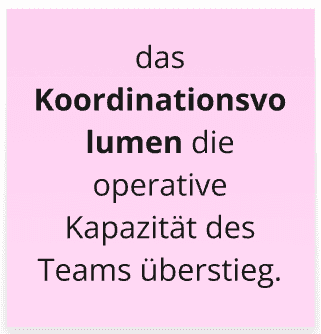
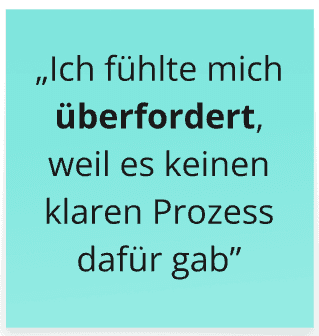
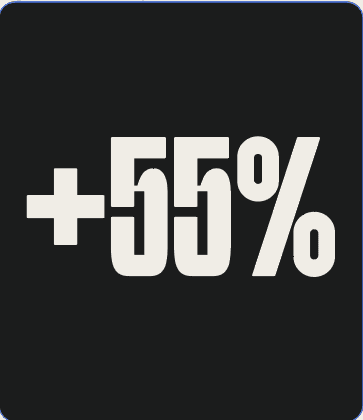
55% lose time due to a lack of centralization.
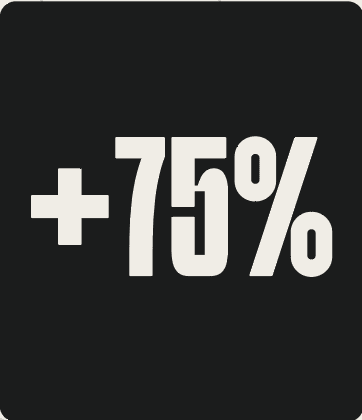
75% miss price transparency and simple processes.
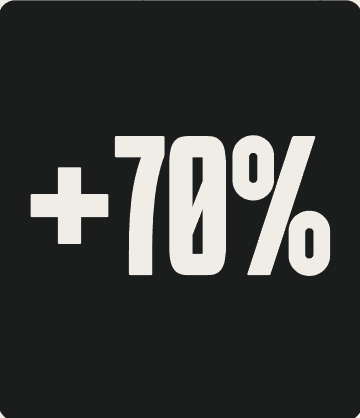
70% want intuitive, trust-building tools.

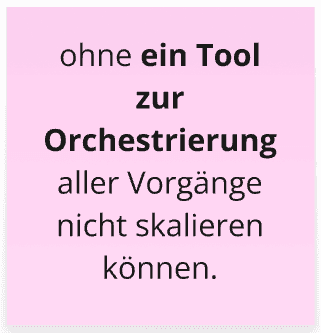
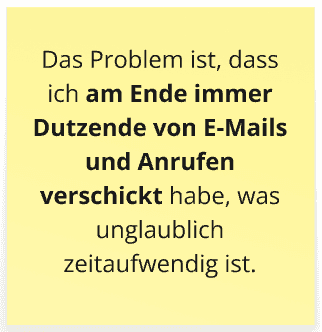
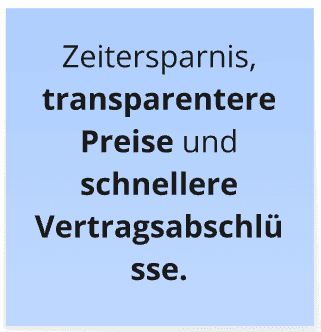
Complete transparency – clear pricing and real-time updates.
Smooth processes – integrated communication and centralized management.
Clear visualization – tools that help users understand and trust the final result.
Empathy

Michael Ayala Escobar
Produktdesigner
User Pain Point
INSIGHTS
The solution had to achieve three things: transparency, smooth processes, and visual clarity.
To gain a deeper understanding of how B2B users interact with existing market solutions and to identify critical pain points, I conducted user research before analyzing competitor offerings. Using a combination of qualitative and quantitative methods, I gathered valuable insights into user behaviors, needs, and context. These findings were synthesized through affinity mapping, which helped uncover the key insights that informed and shaped the development of the solution.
Key Questions:
What do users need in order to confidently make decisions during the event planning process?
How might we reduce uncertainty and cognitive load during the discovery phase so B2B users can confidently plan and configure their events?
KEY INSIGHTS
Affinity map
Lack of transparency, long processing times and high cognitive load.
+
Customer journey map
Disorientation in critical phases, friction in decision-making, and the need for immediate feedback.
=
strategy
Configurator with real-time pricing, guided design, centralized process.
Clear logic creates trust
Michael Ayala Escobar
Produktdesigner
Empathy
I combined my findings from two perspectives: behavioral patterns and real-world user experience.
•The result was clear: users need transparency, guidance, and immediate feedback.
•This led me to the strategic decision to implement a guided configurator with real-time pricing.
PERSONAS
user segmentation
To better guide the design and empathize with our users, I further synthesized the interview results and created the following characters:
Although I initially identified three different user types — B2B, B2C, and internal users — I narrowed the focus to a single primary user. Prioritizing the B2B user allowed for a stronger alignment between business objectives and the most critical user problem, ensuring the product addressed the highest-impact needs.
The B2B user segment was prioritized due to its higher usage frequency, greater purchasing power, and stronger scalability potential compared to other user groups.
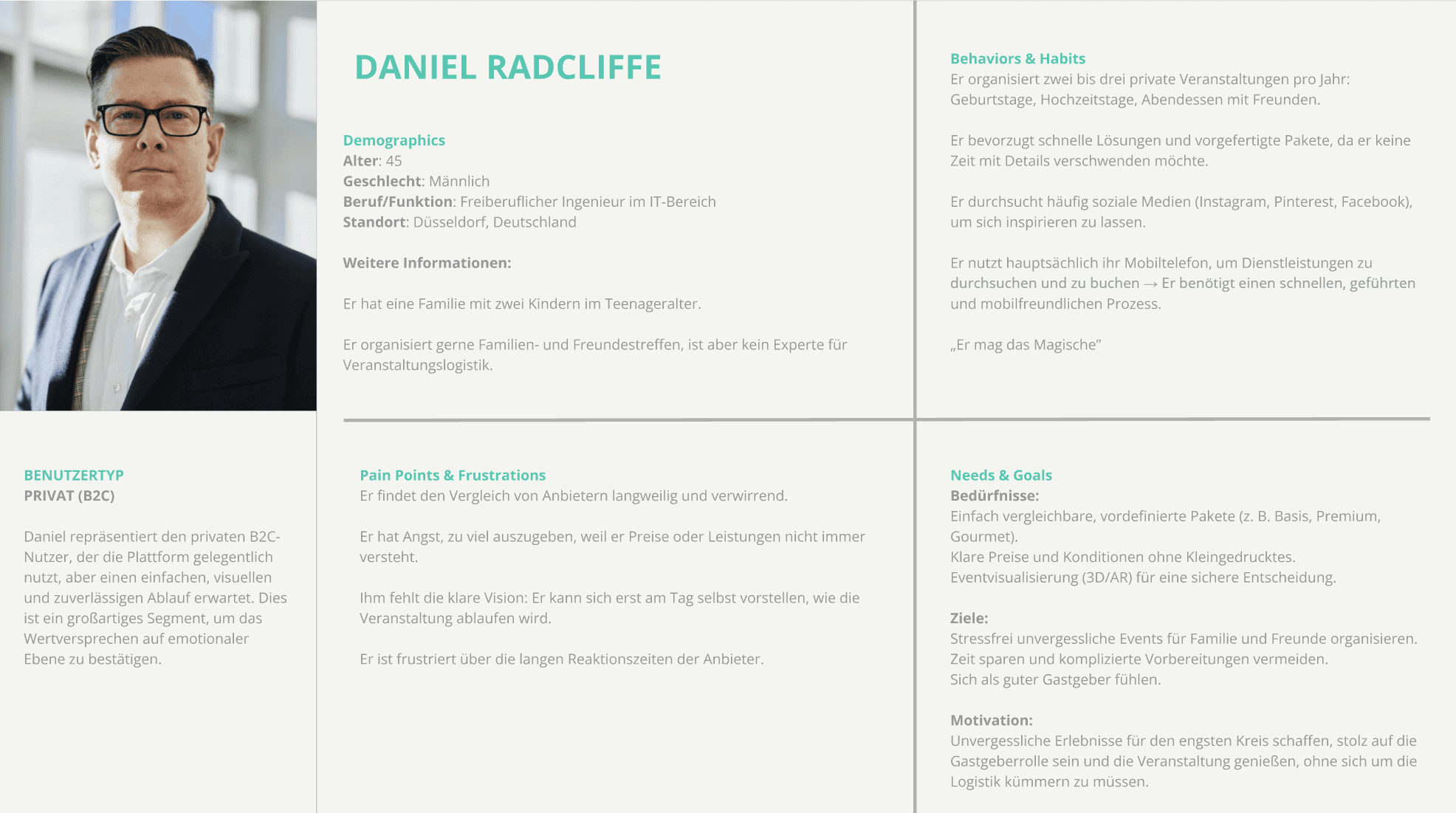
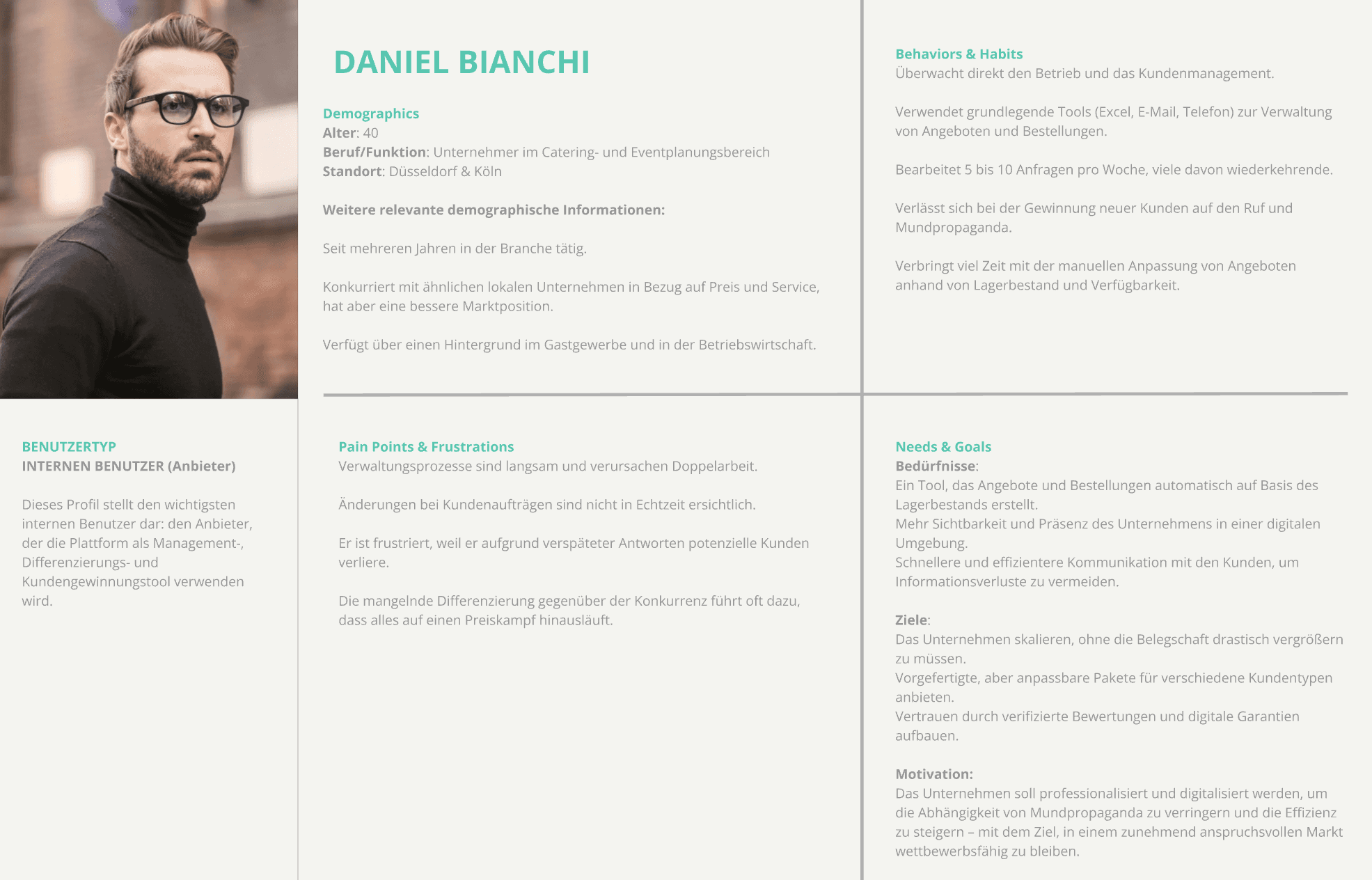
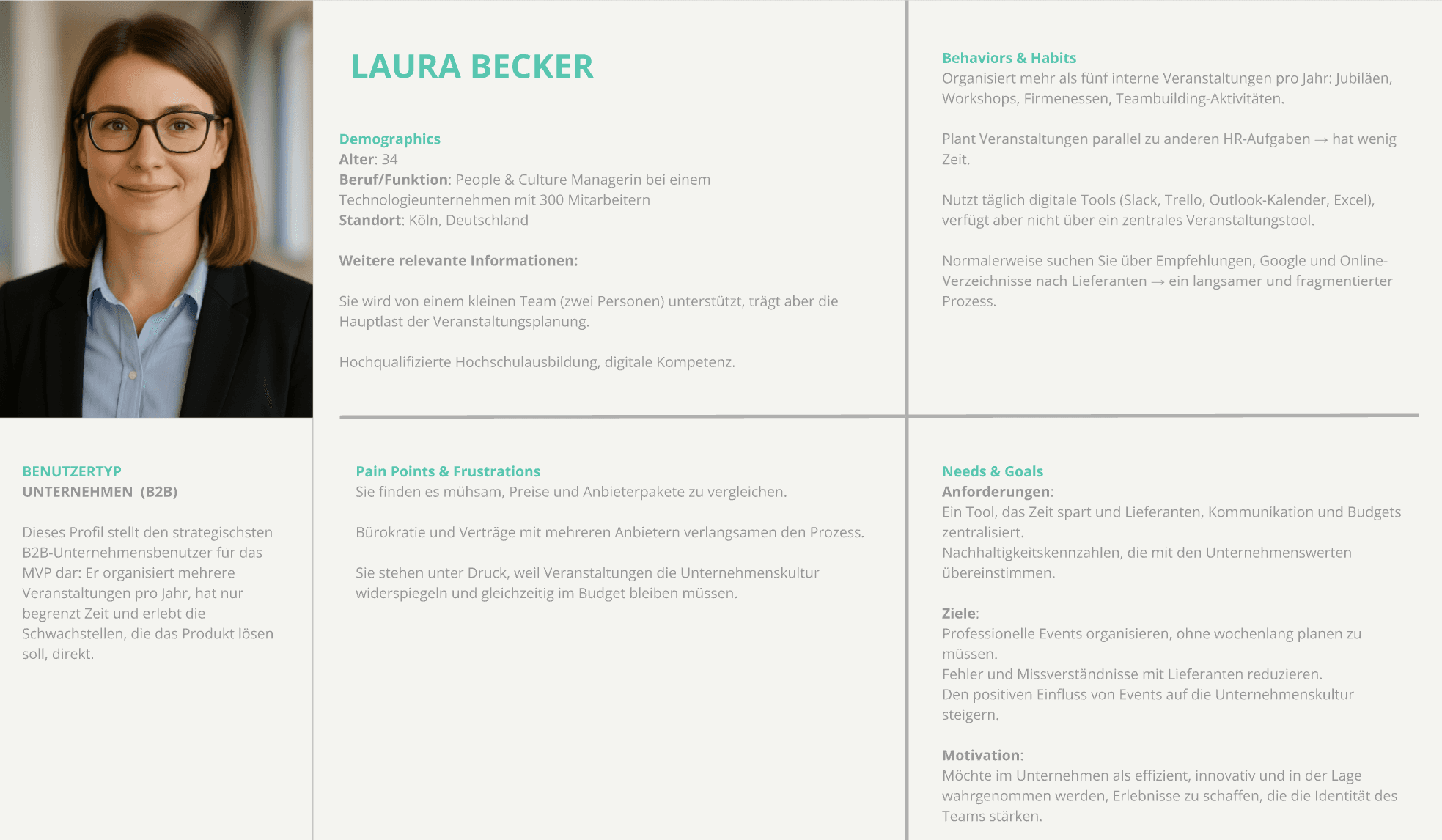
Primary B2B user
These insights directly informed the conceptualization phase, where hypotheses and design principles were defined.
Competitive analysis
During this phase, I conducted a structured market and competitor analysis to understand how existing solutions address the needs of B2B users in the event planning space. I focused on two direct competitors, evaluating their value propositions, product offerings, and end-to-end user journeys, and complemented this with heuristic evaluations of their core experiences.
This allowed me to identify recurring patterns, design trends, usability issues, and gaps in the market, translating these insights into clear opportunity areas and actionable design principles that informed the product strategy and guided key decisions throughout the project.
Informational navigation instead of task-oriented flows
The navigation is structured around company categories and locations rather than user goals. As a result, the experience supports exploration, but not efficient decision-making or conversion.
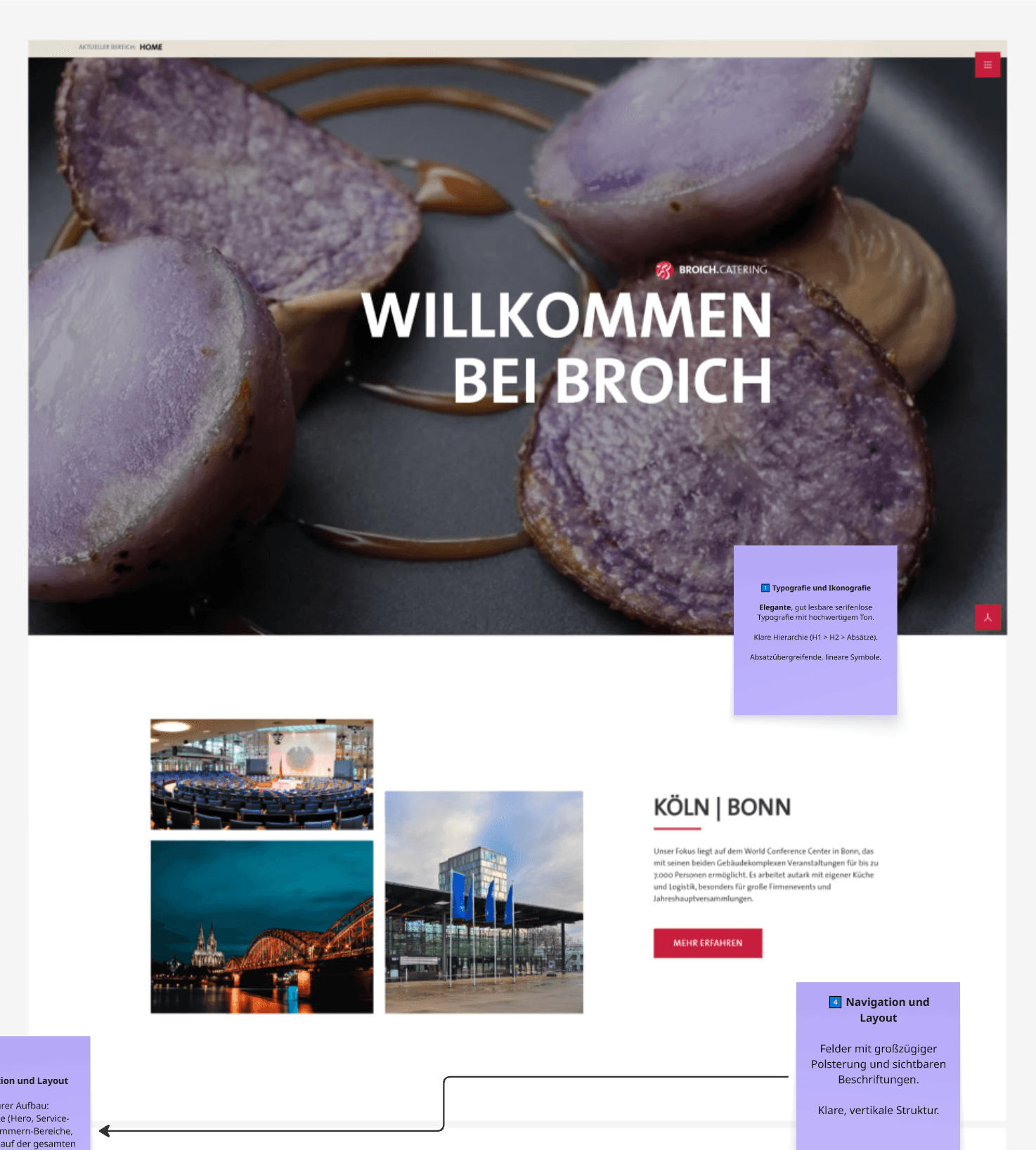
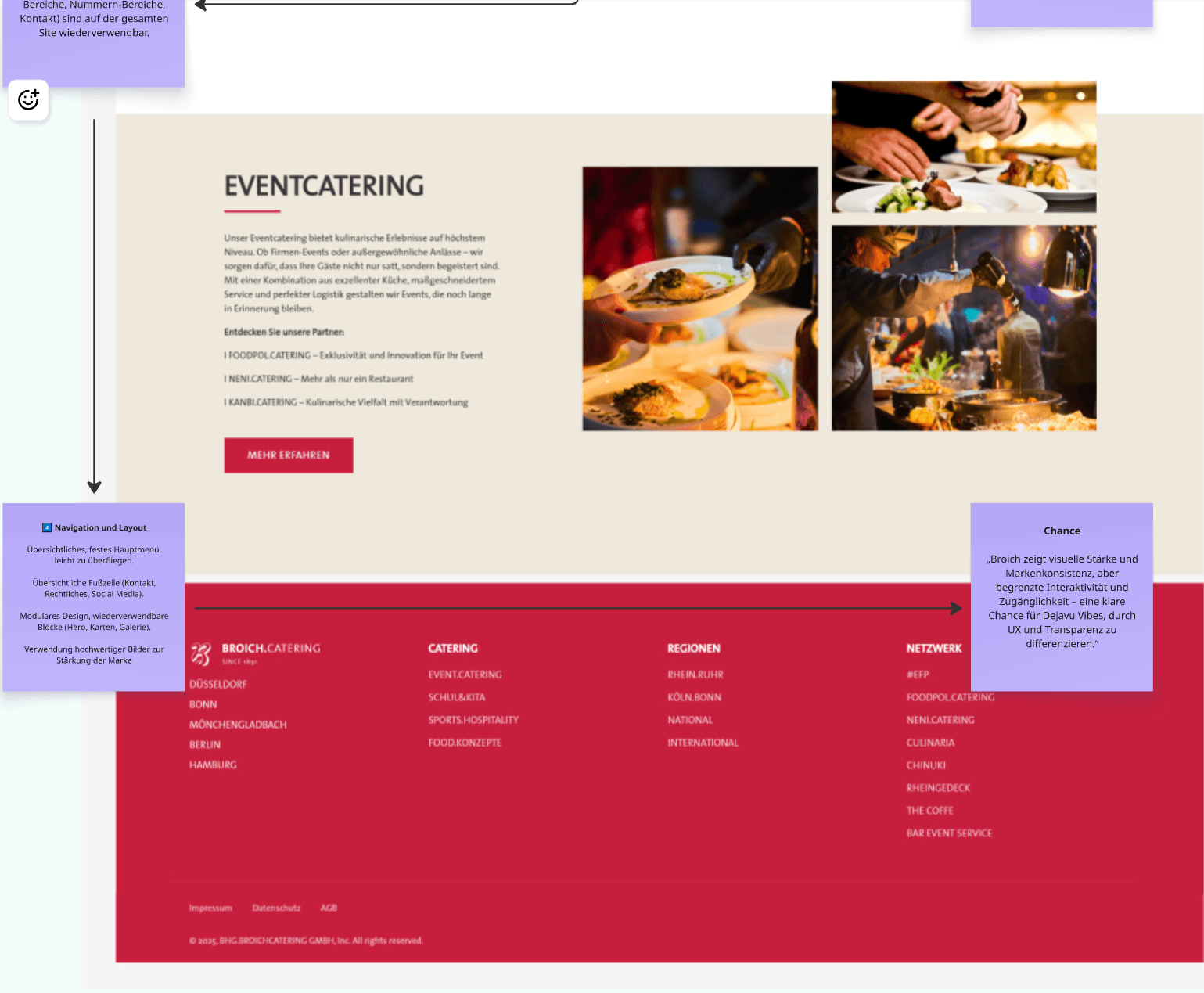
Lack of visual clarity and decision guidance
The homepage presents a large amount of content without a strong visual hierarchy or clear calls to action. This increases cognitive load and makes it difficult for B2B users to quickly understand how to start planning an event or move forward with a decision.
Content is not structured around the user’s decision process
Although the brand communicates quality and experience well, users are not guided through a clear planning journey. There is no structured way to compare options, understand impact, or progress step-by-step toward a request, which increases friction in complex B2B scenarios.
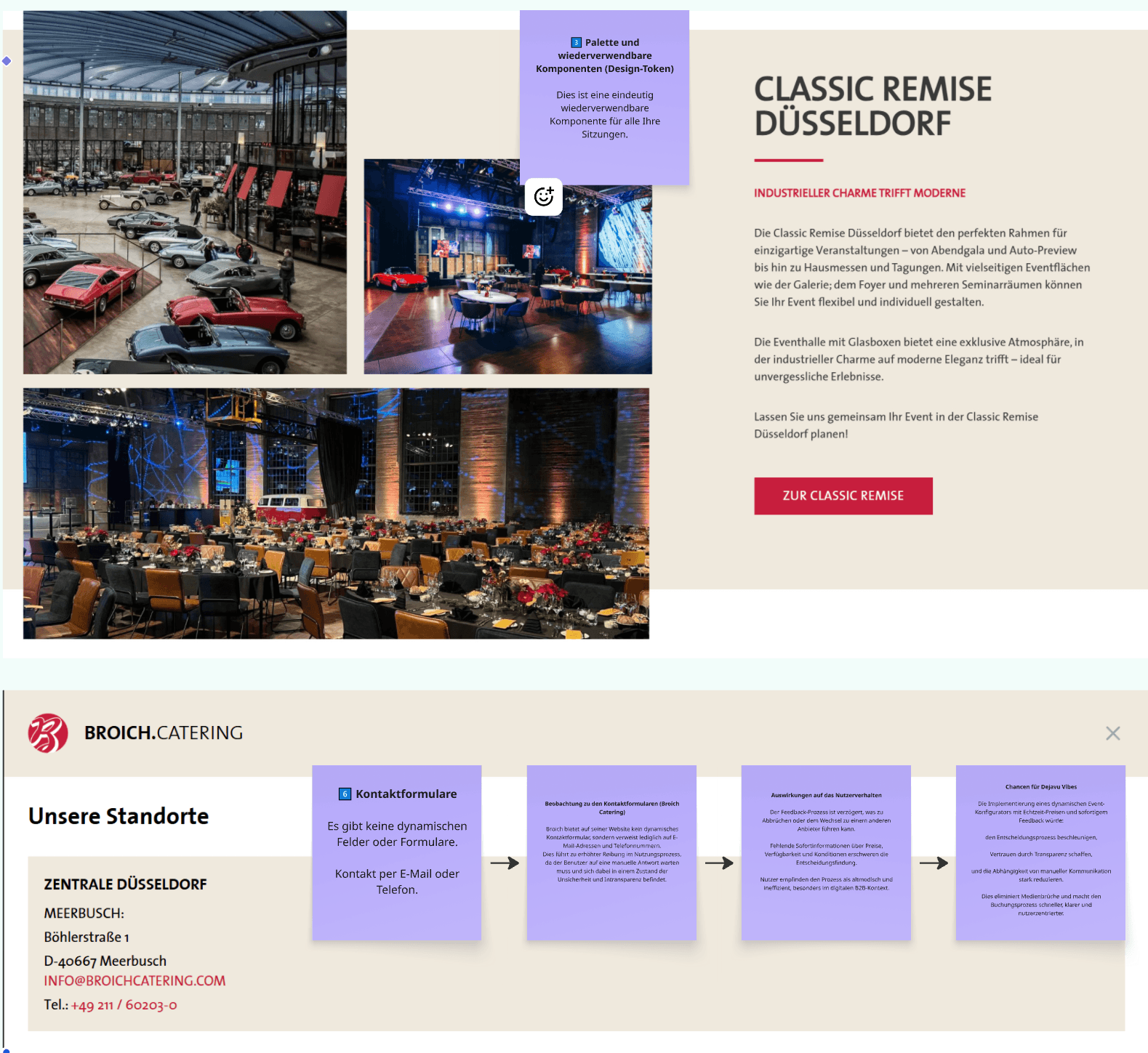
Key Conclusion
Competitor websites are highly effective at communicating brand positioning and premium quality, but they remain largely informational and passive from a product perspective. While they showcase who they are and what they offer, they provide limited support for real user tasks such as planning, budgeting, comparing options, and making confident decisions.
For B2B users, this creates significant friction: prices are not transparent, processes are not digitalized, and sustainability values are communicated as marketing messages rather than as functional decision drivers. The experience relies heavily on large visual imagery to convey atmosphere, but offers little interactivity or guidance to move users toward action.
This gap revealed a clear opportunity:
to design a desktop-first, task-oriented product that combines strong visual identity with a guided, interactive configuration flow, real-time pricing, and embedded sustainability feedback.
By turning brand values into functional product features, the experience shifts from passive browsing to active, confident decision-making.
Conceptualization phase
What do we need to understand, validate, and build to solve our users' real problem in a way that is viable for the business and scalable over time?
HOW MIGHT WE
How might we reduce uncertainty and cognitive load during the discovery phase so B2B users can confidently plan and configure their events?
HYPOTHESIS
We believe that a guided configurator with real-time feedback and transparent information for B2B users planning events will result in higher conversion and reduced uncertainty because clear logic, orientation, and immediate feedback build trust during complex decision-making processes.
MVP SCOPE
The MVP was centered around an event configurator as the product’s core feature. Strategically, predefined packages were also introduced as a faster alternative for users and as a basis for A/B testing. This decision helped validate user behavior while laying the groundwork for scaling the MVP into a SaaS solution applicable beyond the initial startup.
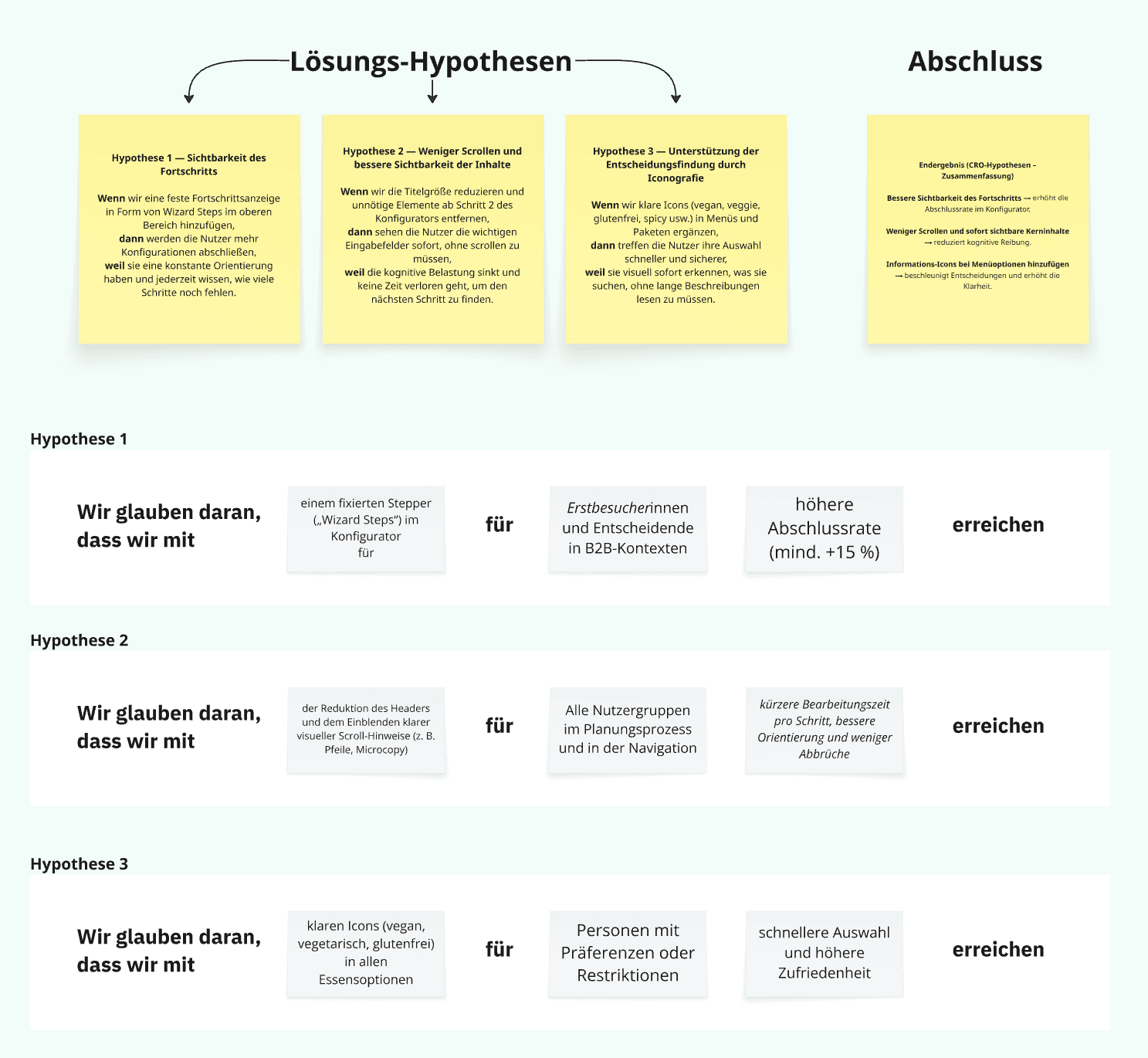
From insights to hypotheses
Transforming research findings into clear, testable hypotheses that align user needs with business goals.
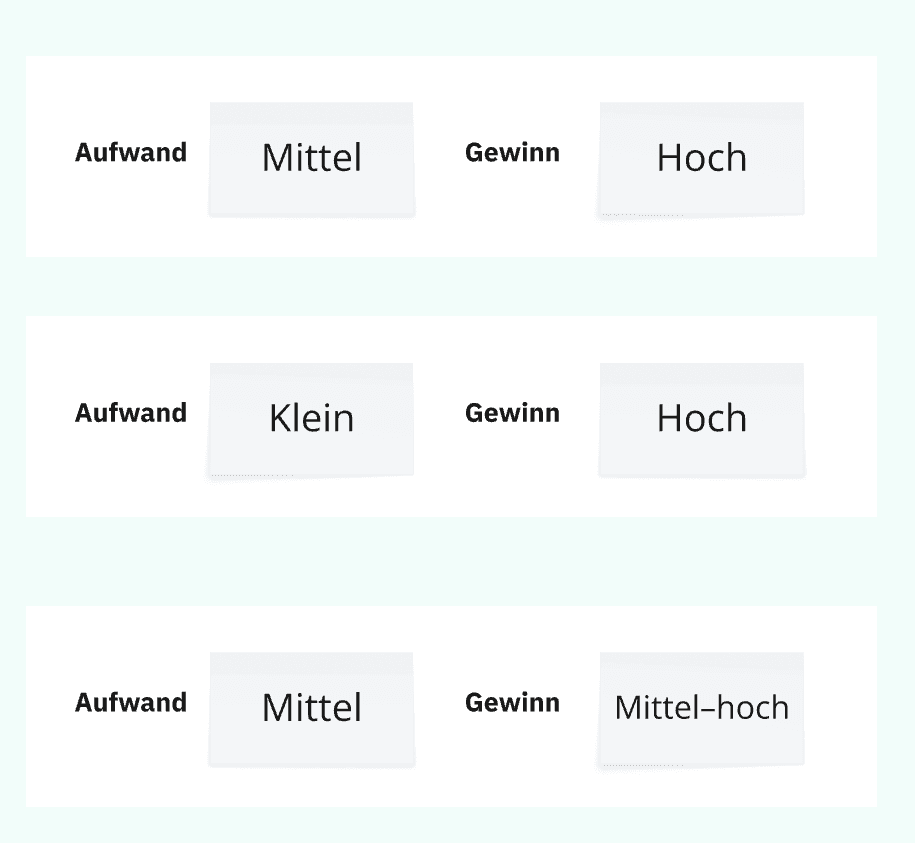
From strategy to MVP scope
Prioritizing high-impact features through effort vs. value mapping to define a scalable and viable MVP.
The three main design principles
Clear Logic Builds Trust
A structured, guided, and transparent experience enables users to make confident decisions in complex scenarios.
Transparency by Default
Key information (price, scope, terms, impact) must be visible, understandable, and predictable at all times.
Why it was defined:
Research showed that a lack of clarity leads to uncertainty, delays in decision-making, and process abandonment.
Applied to design
Real-time price estimates
Visible changes when modifying…
Clear summaries
Reduce Cognitive Friction
Minimizing the mental effort required to understand, decide, and move forward.
Why it was defined:
Users felt overwhelmed by fragmented and manual processes.
Applied to design
Guided flows (wizards)
Limited and well-structured options
Clear and action-oriented language
Guiding Without Imposing
Offering clear guidance without taking away the user's control.
Why it was defined:
There are different user profiles: some want speed, others seek personalization.
Applied to design
Points: Configurator vs. Packages
Option for human assistance
Flexible yet structured navigation
Conclusion
These principles guided all subsequent design decisions, from information architecture to interface details.
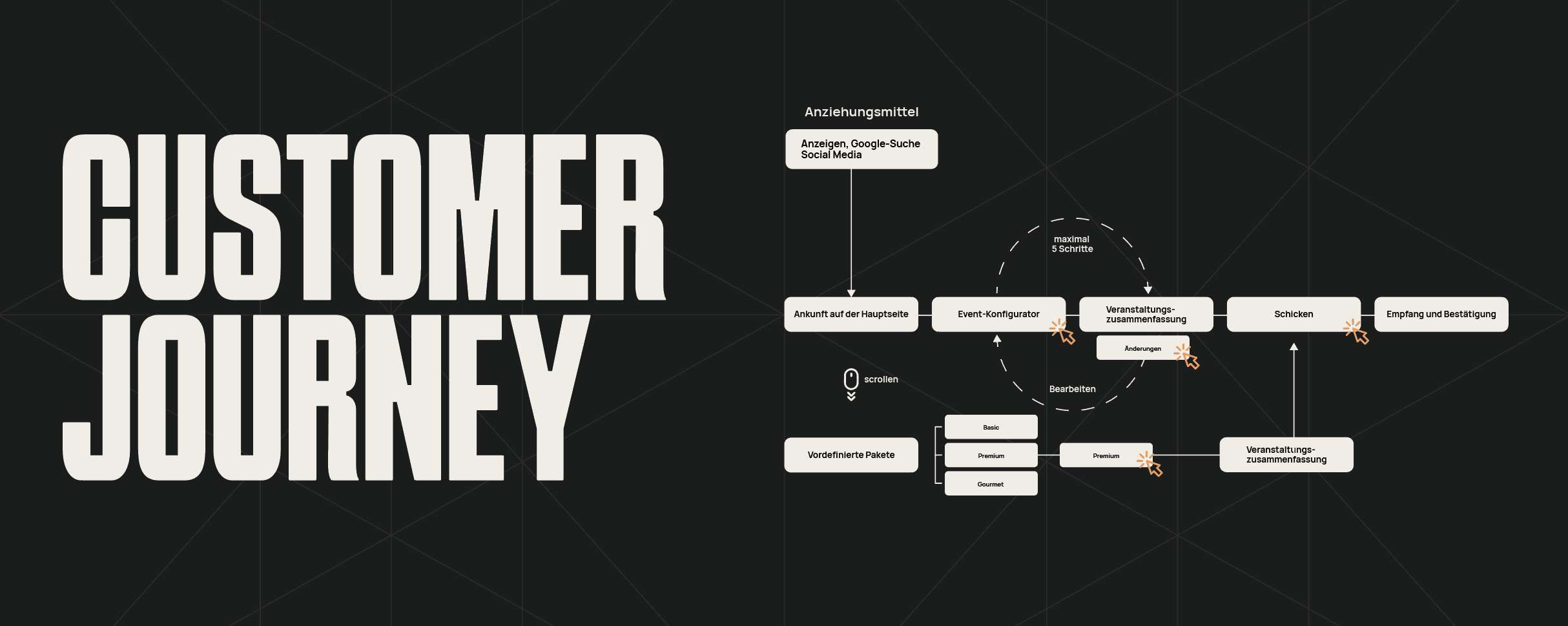
Customer Journey (MVP Focus)
The customer journey was intentionally designed to reduce complexity and concentrate on the highest-impact moments of the B2B event planning process.
Rather than covering the entire lifecycle, the MVP focuses on a streamlined path of no more than five key steps: entry, configuration, validation, adjustment, and submission. This structure reflects how users naturally iterate, compare options, and seek reassurance before committing to a decision.
By centering the journey around a guided event configurator and a clear summary loop, the experience minimizes uncertainty, supports informed choices, and keeps users in control. This focused journey definition allowed the MVP to validate real user behavior, reduce cognitive load, and establish a solid foundation for scaling the product in future phases.
Design phase
How might we translate our research insights into a clear, scalable and usable product experience that reduces friction and enables confident decision-making for B2B users?
USER FLOWS
The main user flows were defined based on the pain points identified during research, prioritizing clarity, friction reduction, and trust. Each flow addresses a different user need, while maintaining the shared goal of enabling fast and confident decision-making.
Successfully setting up an event / Client
Main flow
Successfully booking a package / Client
Request a quote based on the search for trust / Client
Action 100% Completed
Action 100% Completed
Action 100% Completed
CONFIGURATOR
Decision
SEND
STARSEITE
CONFIRMATION
EDIT/CUSTOMIZE
Yes
No
BUTTOM
BUTTOM
The user wants to send the request?
STARSEITE
Team - About
CONTACT
CONFIRMATION
BUTTOM
BUTTOM
BUTTOM
STARSEITE
PACKAGES
CONFIRMATION
DETAILED PACKAGE
The user chooses one of the 3 options
BASIC
PREMIUM
GOURMET
BUTTOM
BUTTOM
Each flow was designed to accommodate different decision-making styles without fragmenting the experience.
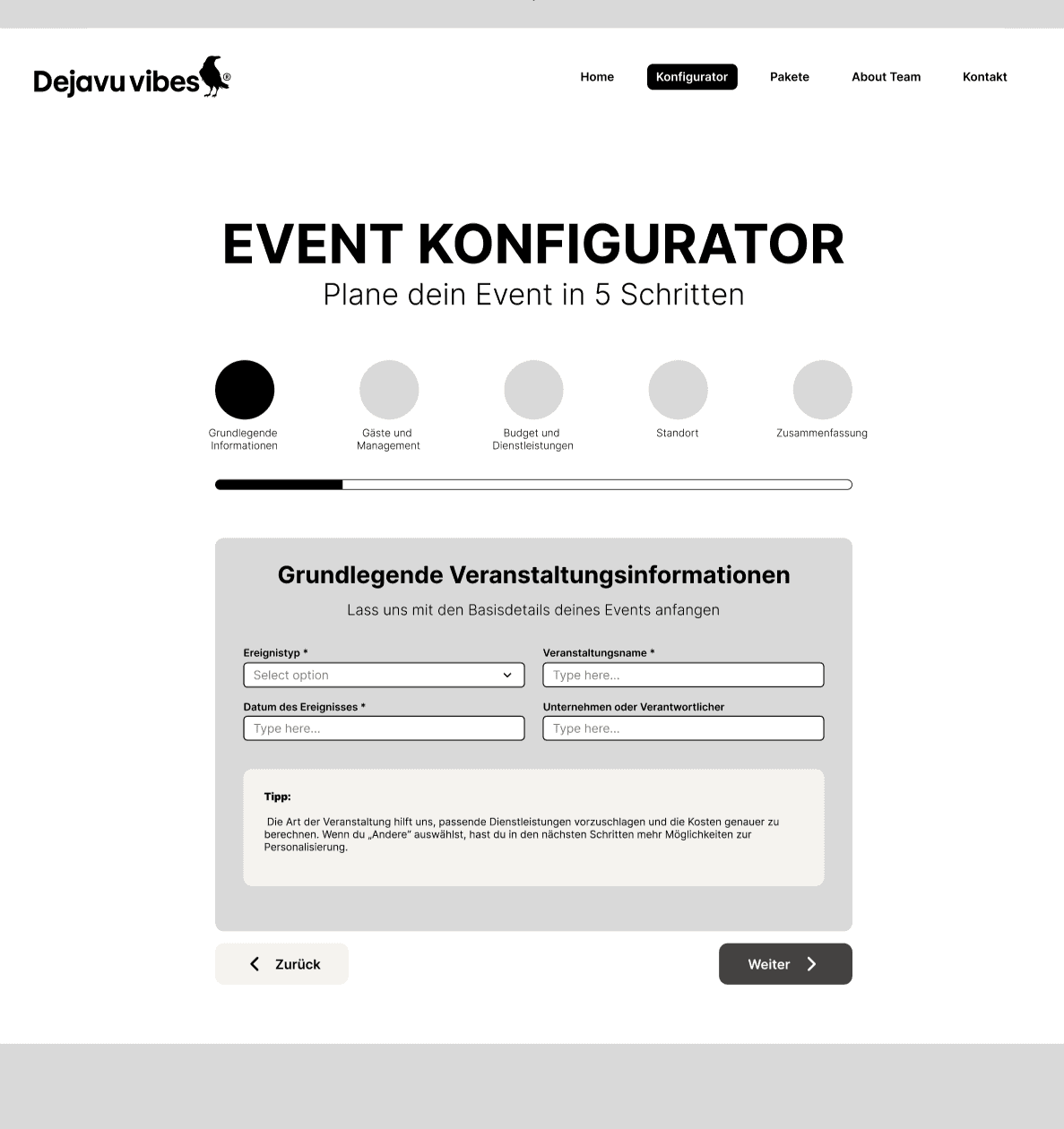
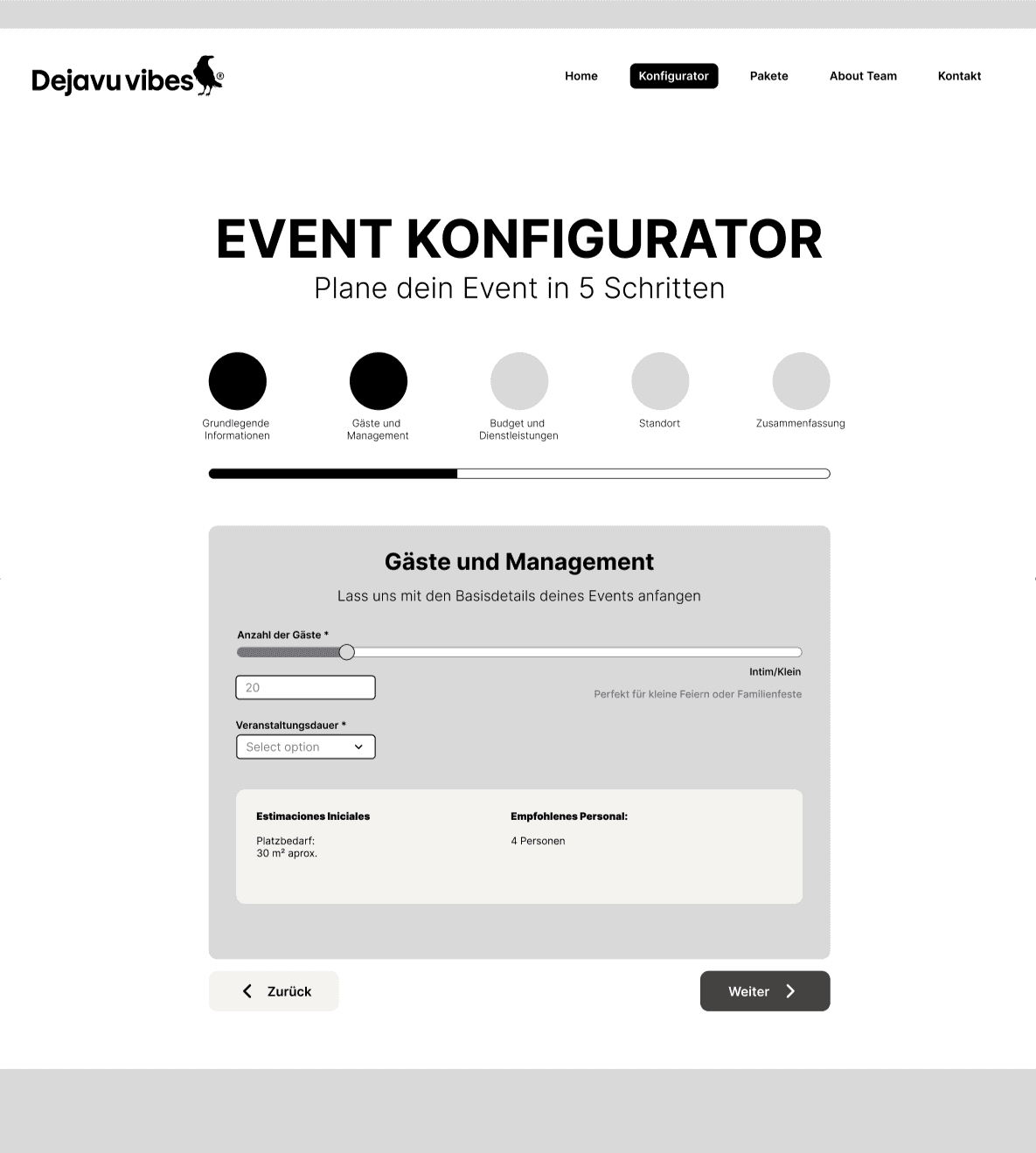
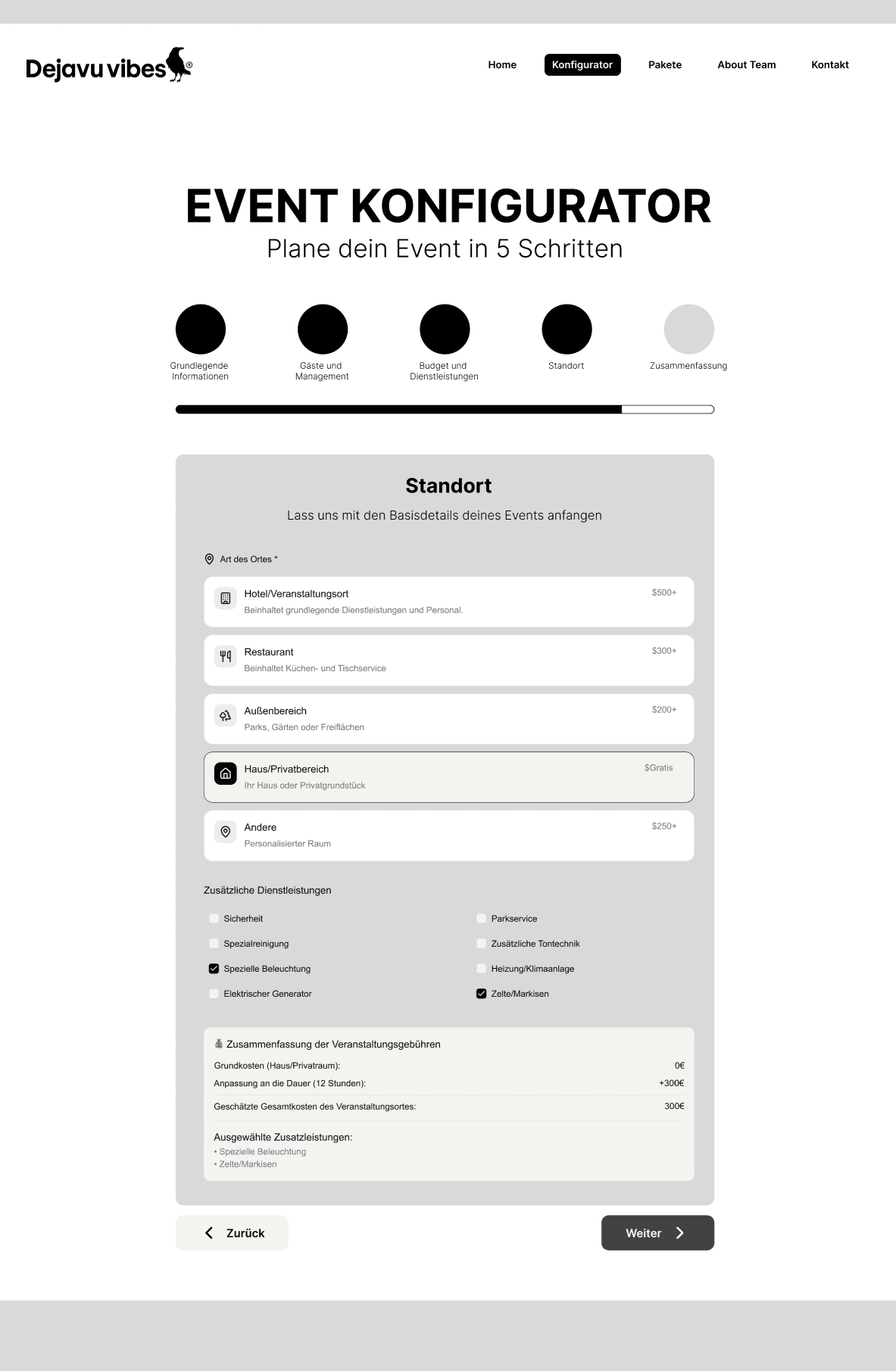
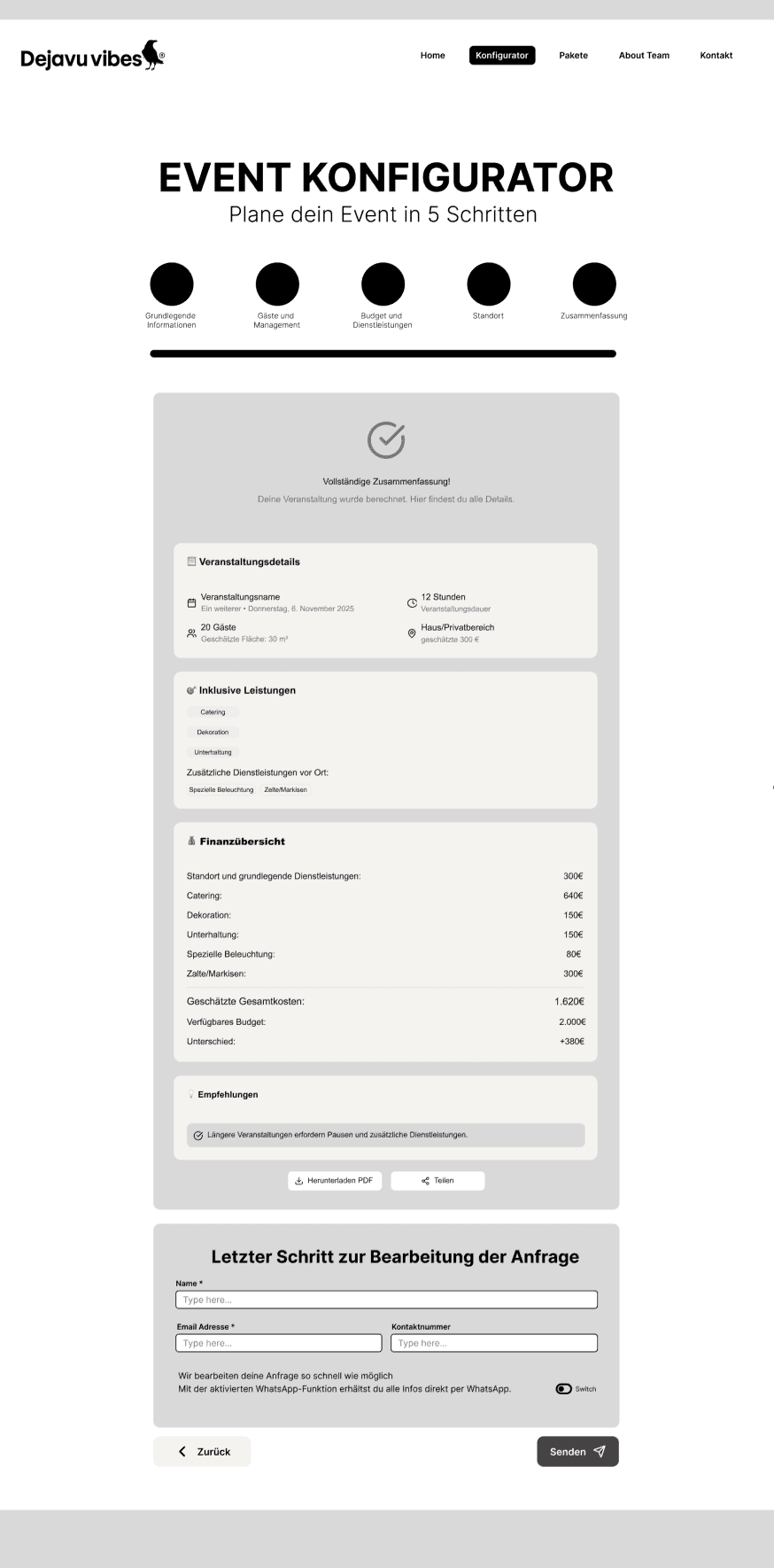
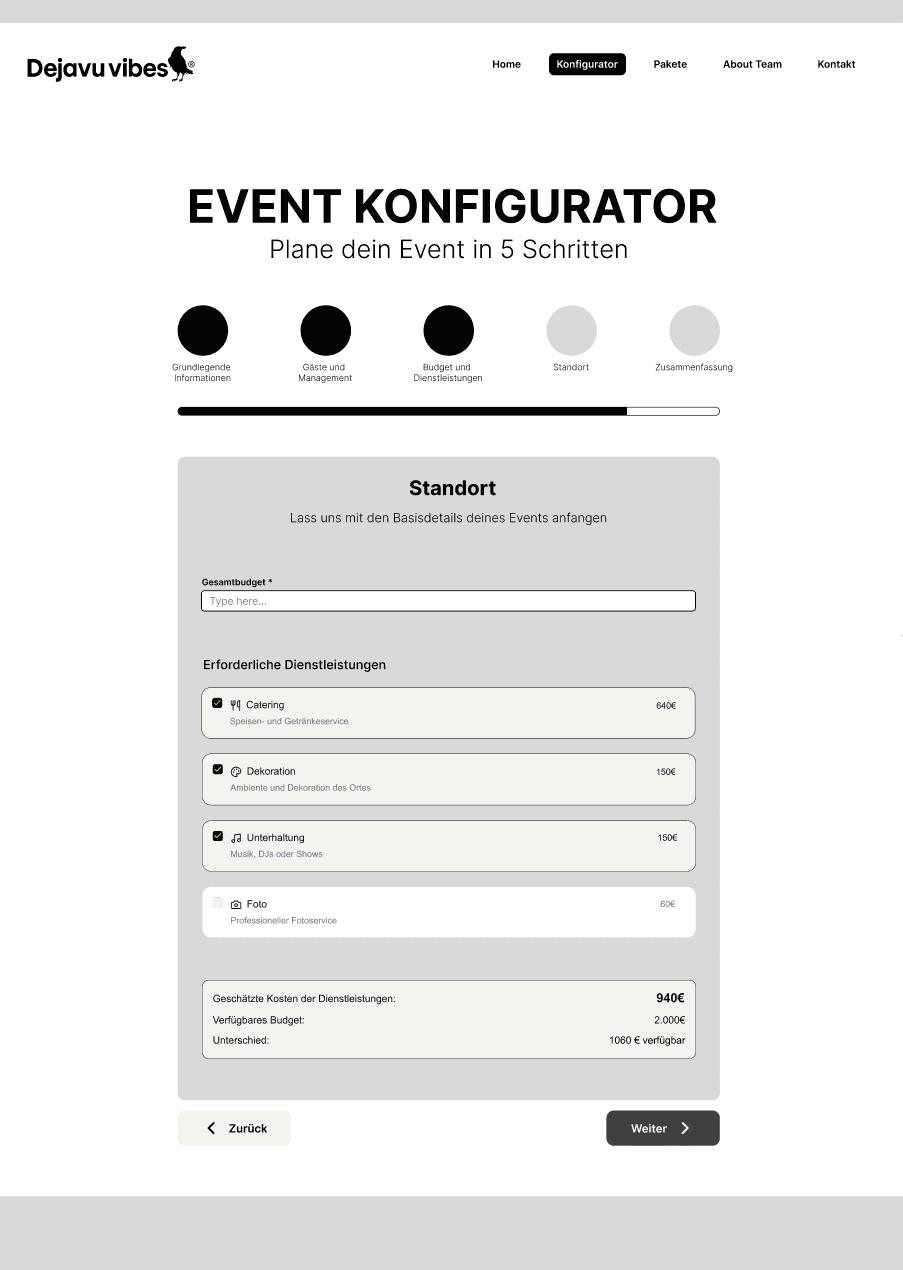
INITIAL WIZARD IN LOW FIDELITY
After defining the event configurator at low and mid fidelity, I conducted multiple usability tests with real users. These sessions uncovered key insights that were later implemented to optimize both navigation and critical design decisions, improving overall usability and clarity.
UX PRINZIPLE
Progressive Disclosure
Goal Gradient Effect
Visibility of system status
Michael Ayala Escobar
Produktdesigner
conceptualization
Guided flow → + clarity, – friction
Improvements included removing headers from step two (2-4) of the configurator to reduce visual clutter and enhancing the progress bar to improve visibility and user control.
This phase reinforced the importance of iteration, particularly early in the design process. Testing and refining low- and mid-fidelity solutions helped surface critical usability issues before committing to high-fidelity design, ultimately leading to more informed and confident design decisions.
After applying the required adjustments based on usability testing results and once the main user flows were clearly defined, I moved on to defining the final design. To guide this phase, I created a reference moodboard aligned with the project’s goals and constraints, establishing a clear creative direction for the visual design.

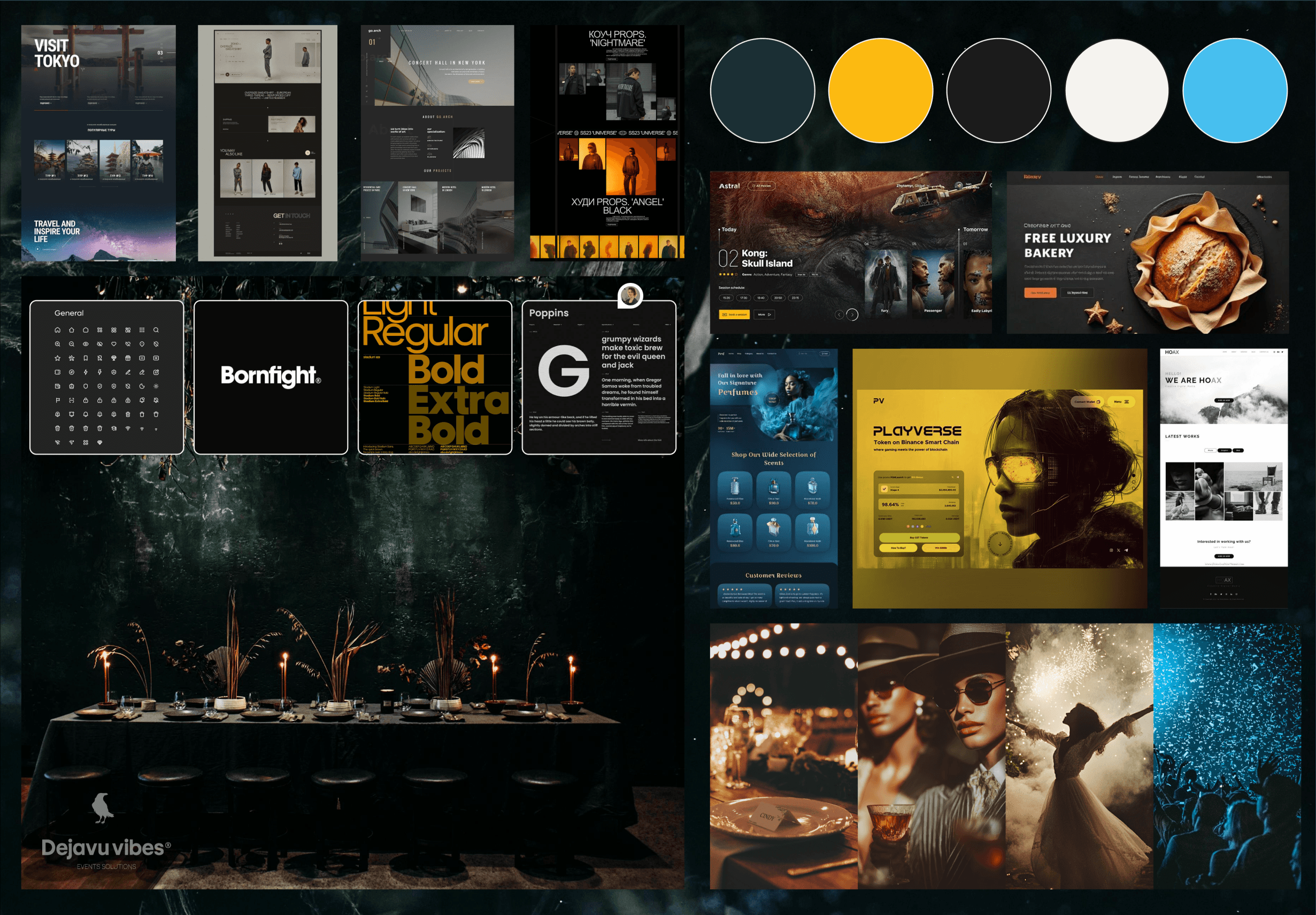
Michael Ayala Escobar
Produktdesigner
Moodboard
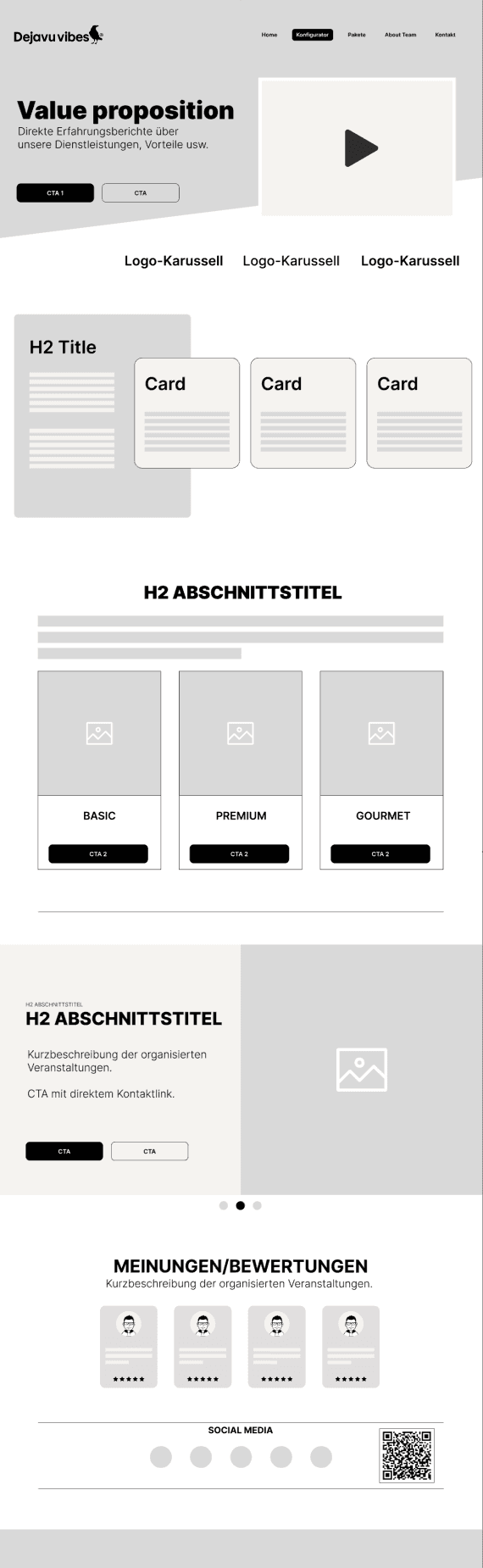
Low-Fi
conceptualization
Brand Foundations
In addition to leading the product design end to end, I also defined the initial visual identity and brand foundations. This work ensured consistency between the brand’s values, visual language, and the product experience, establishing a coherent system that supports trust, recognition, and future scalability.
This ensured that brand perception and product usability evolved as a single system.
The Solution
What user problem does this screen solve?
Priorität gegenüber Desktop-Geräten

Michael Ayala Escobar
Produktdesigner
Entwurfsphase
GESTALTUNG
Konfigurator
B2B-Umgebungen
Pakete (Vorschau)
Kontakt
Design
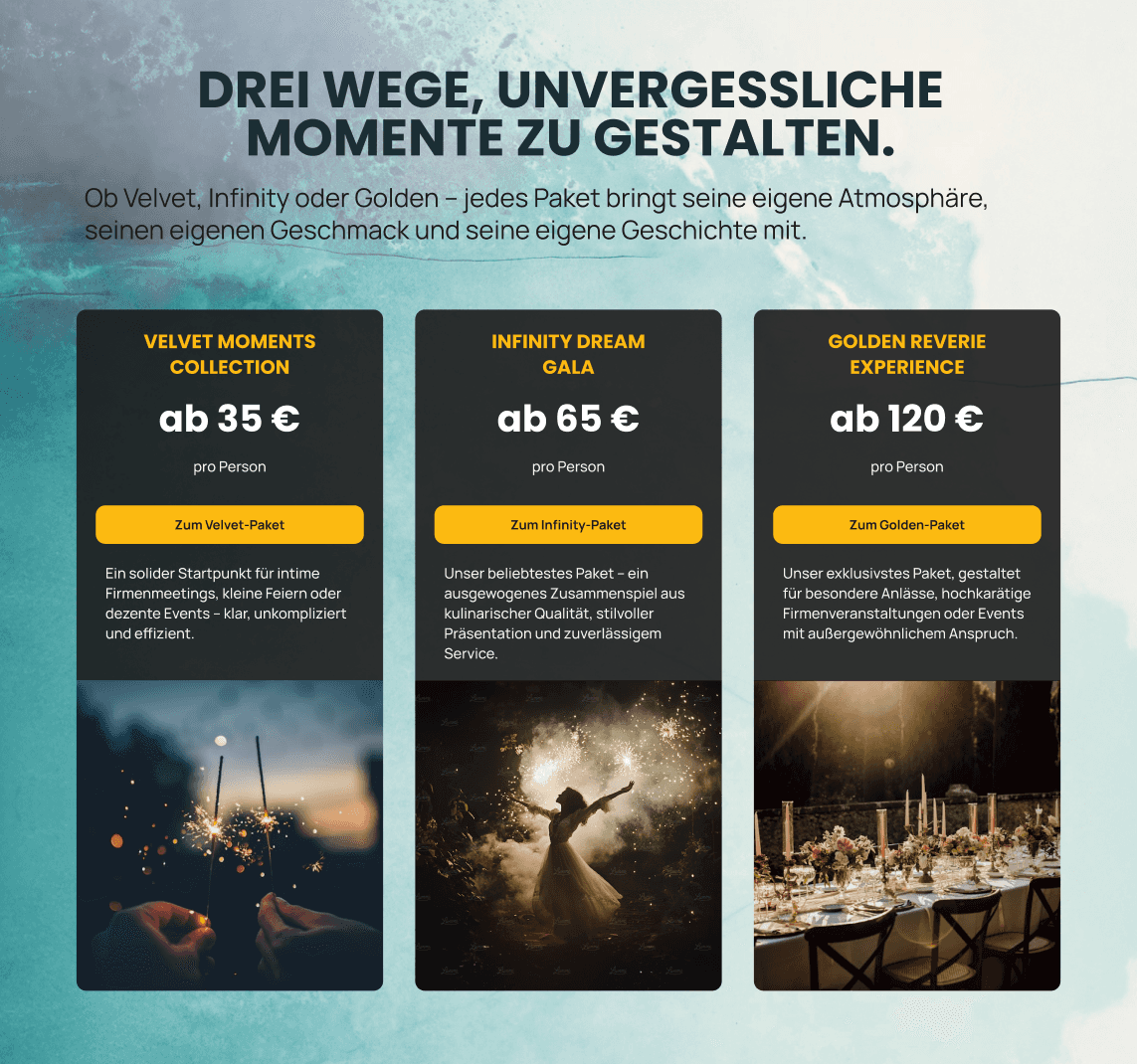
Three ways to convert or frictionless planning
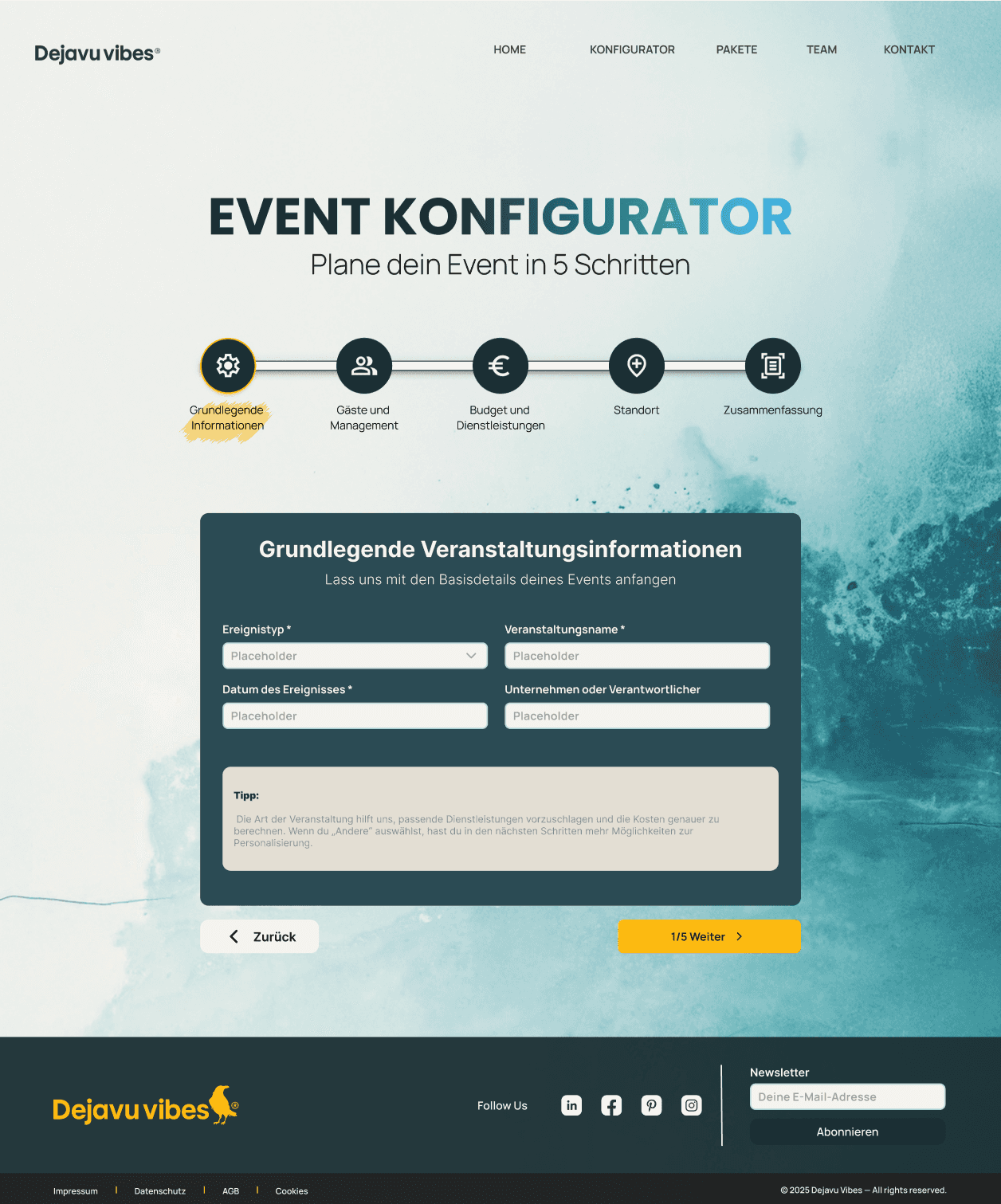
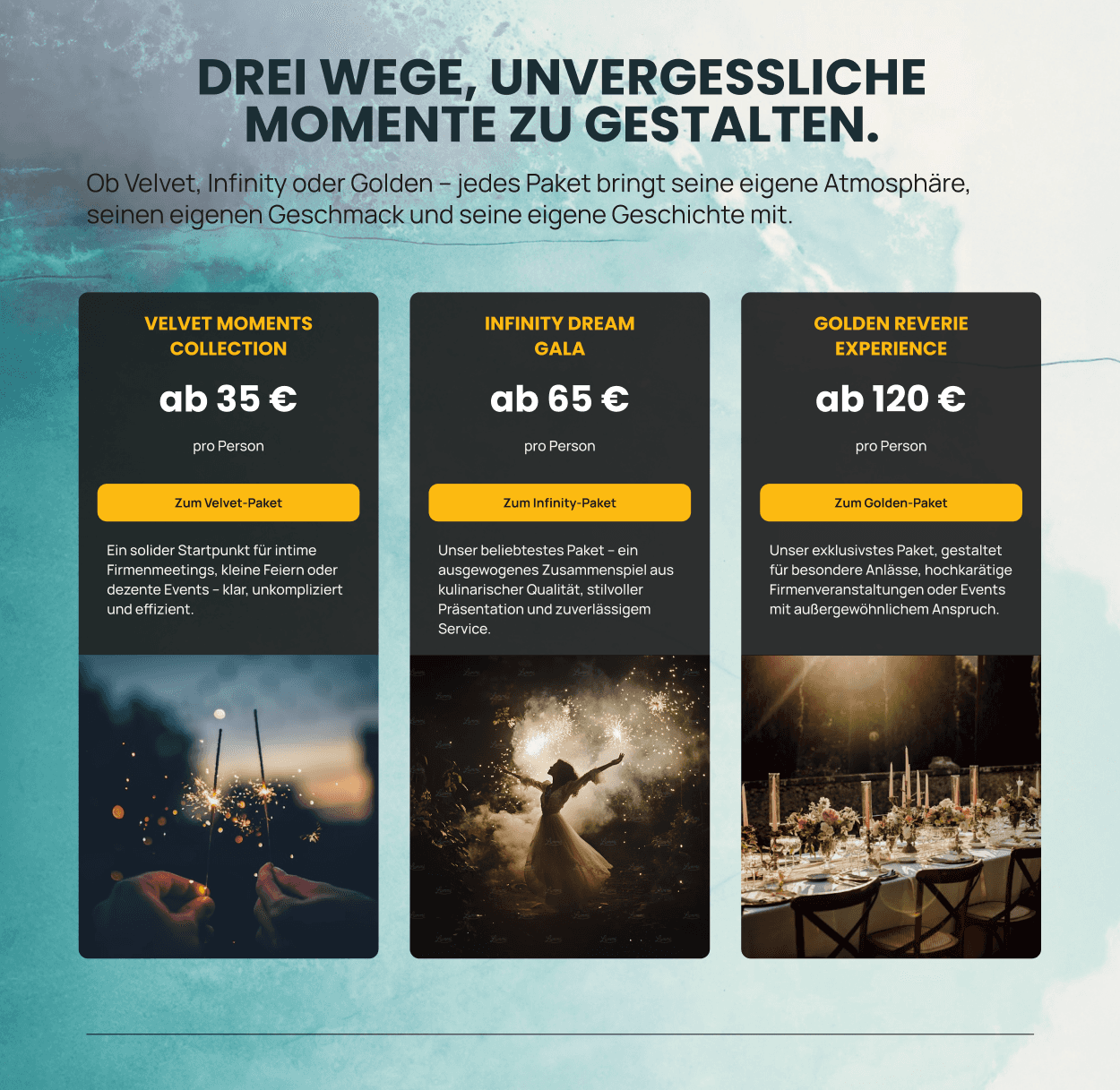
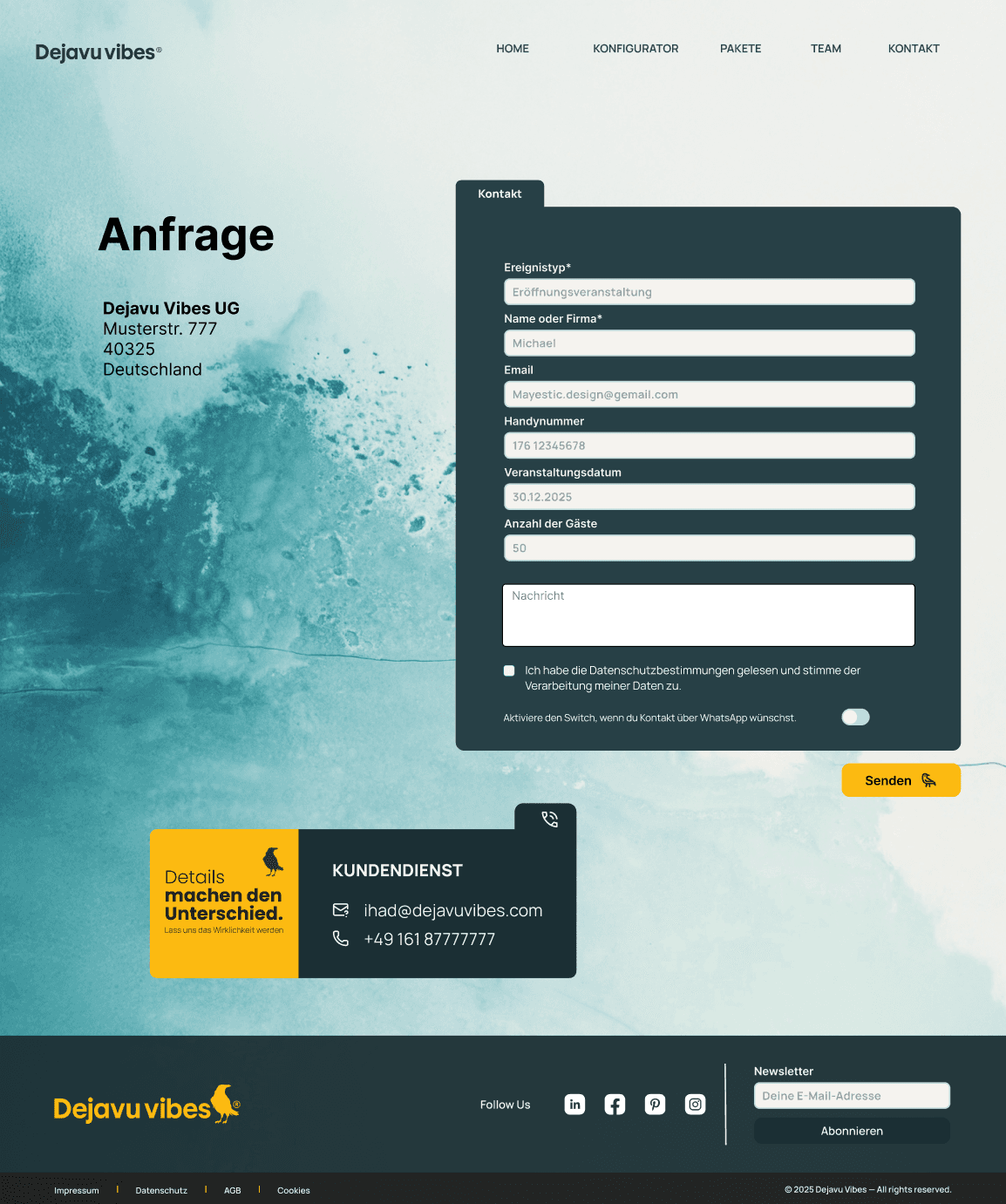
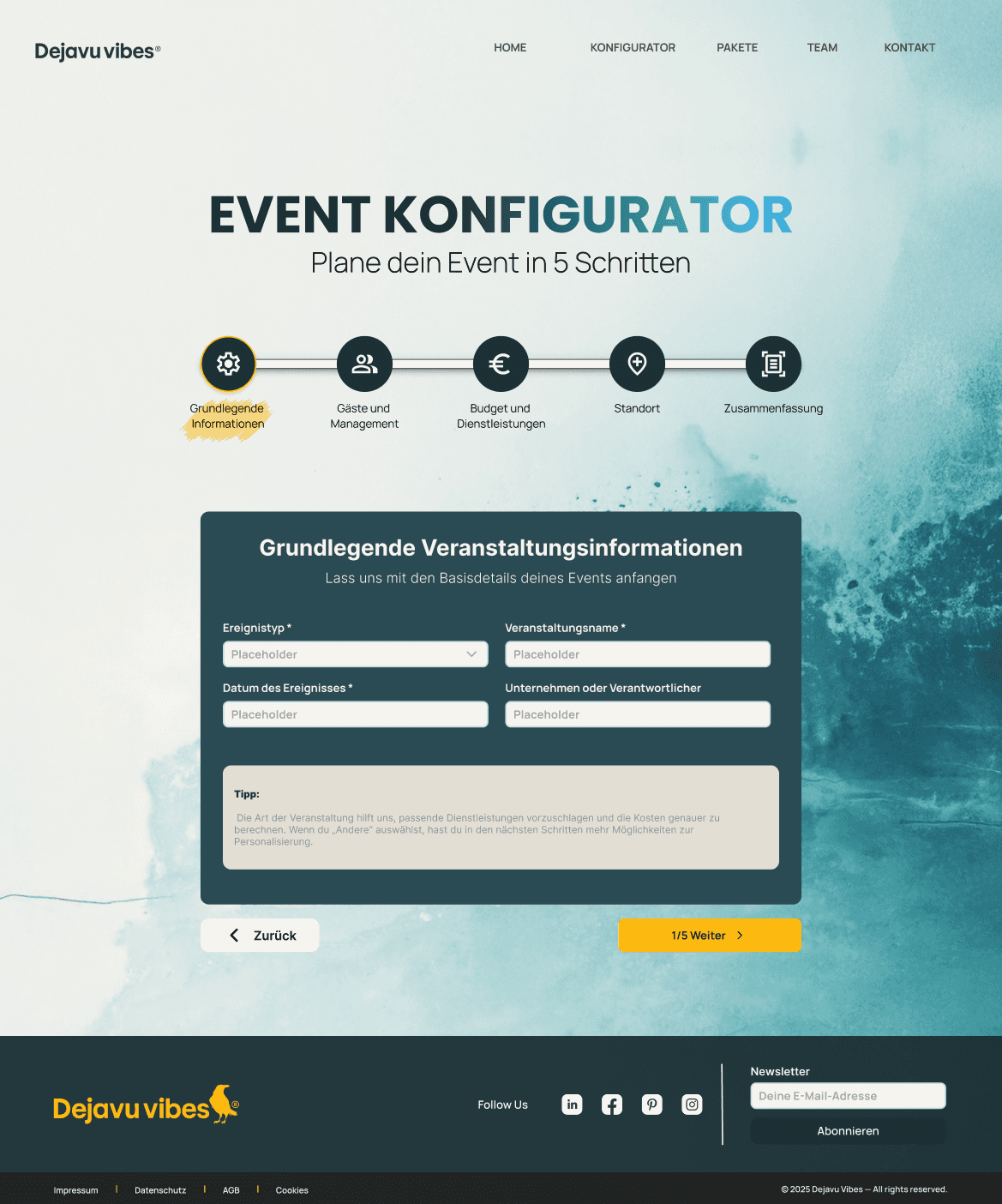
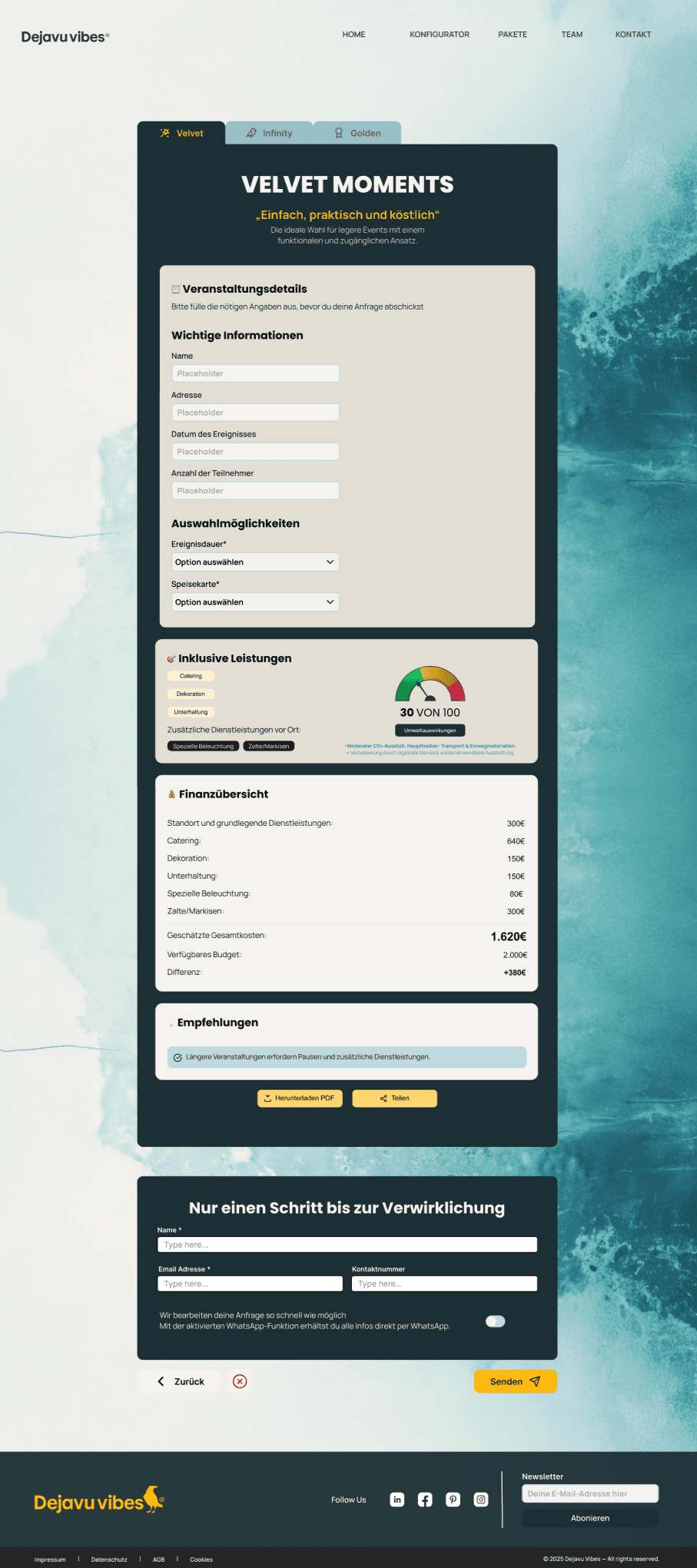
These screens are part of the core user flows — event configuration, predefined packages, and direct advisory support. They were designed to reduce uncertainty during decision-making by clearly displaying pricing and progress, offering comparable pre-defined options, and providing direct access to personalized guidance through a contact form.
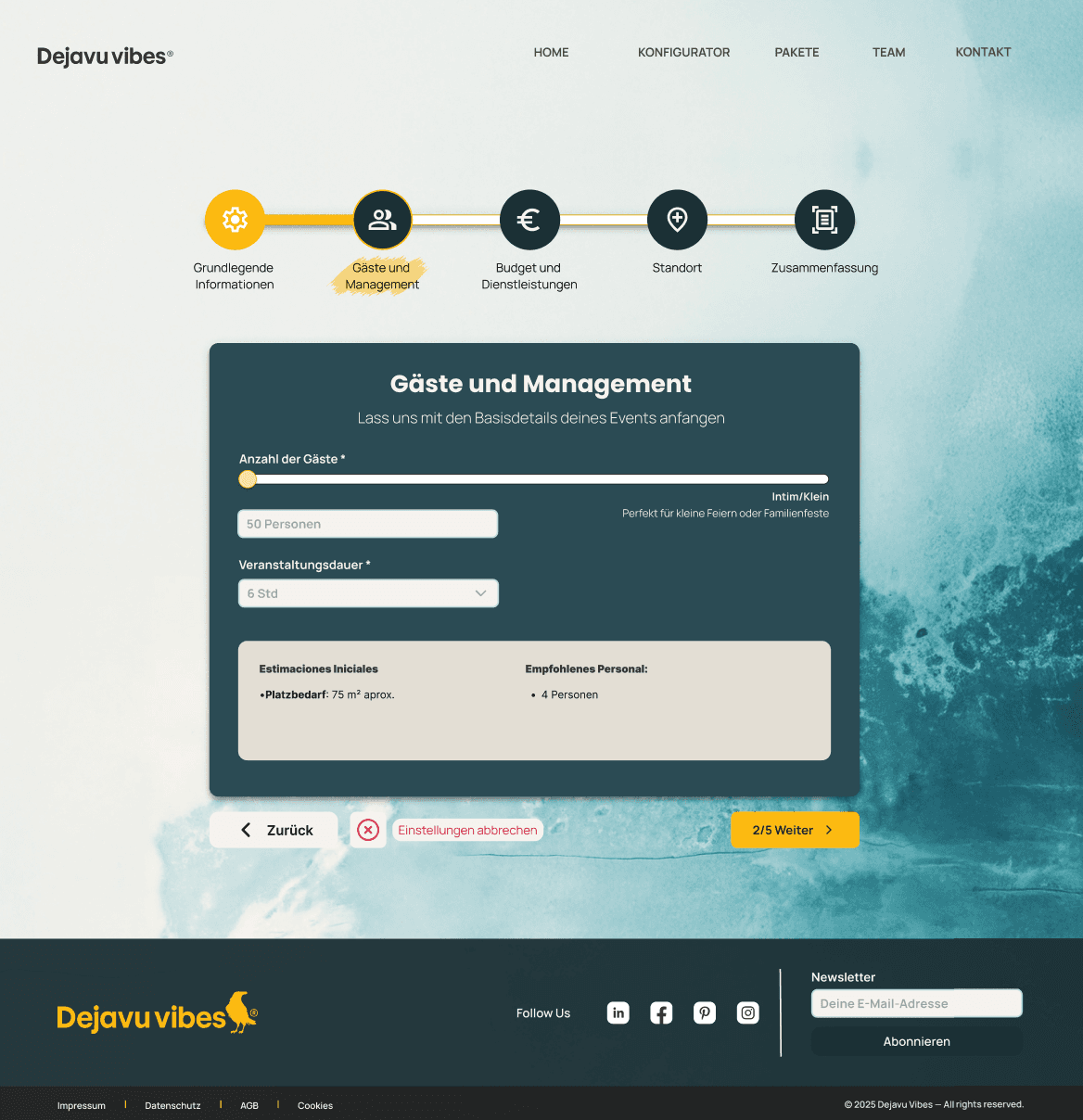
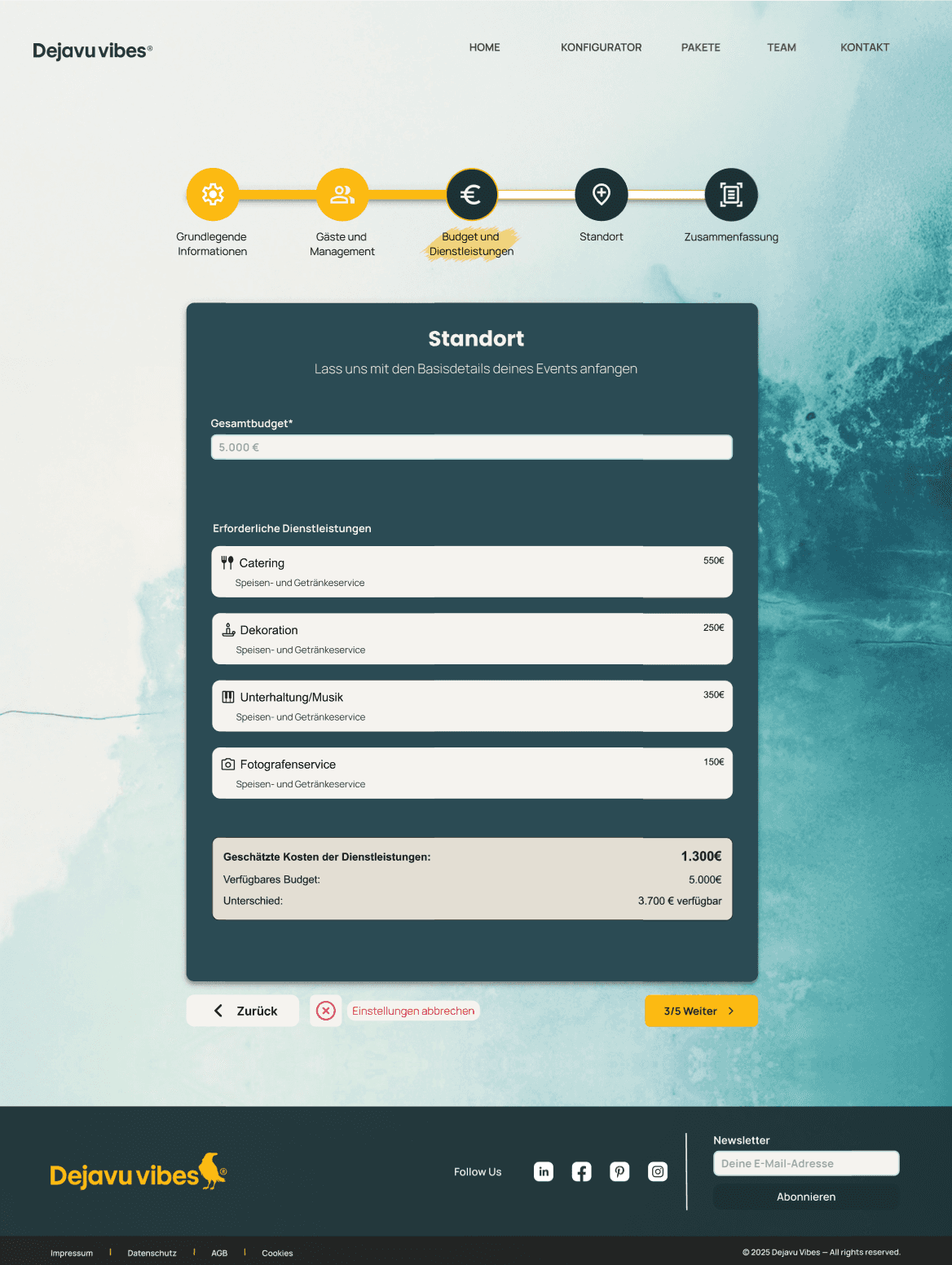
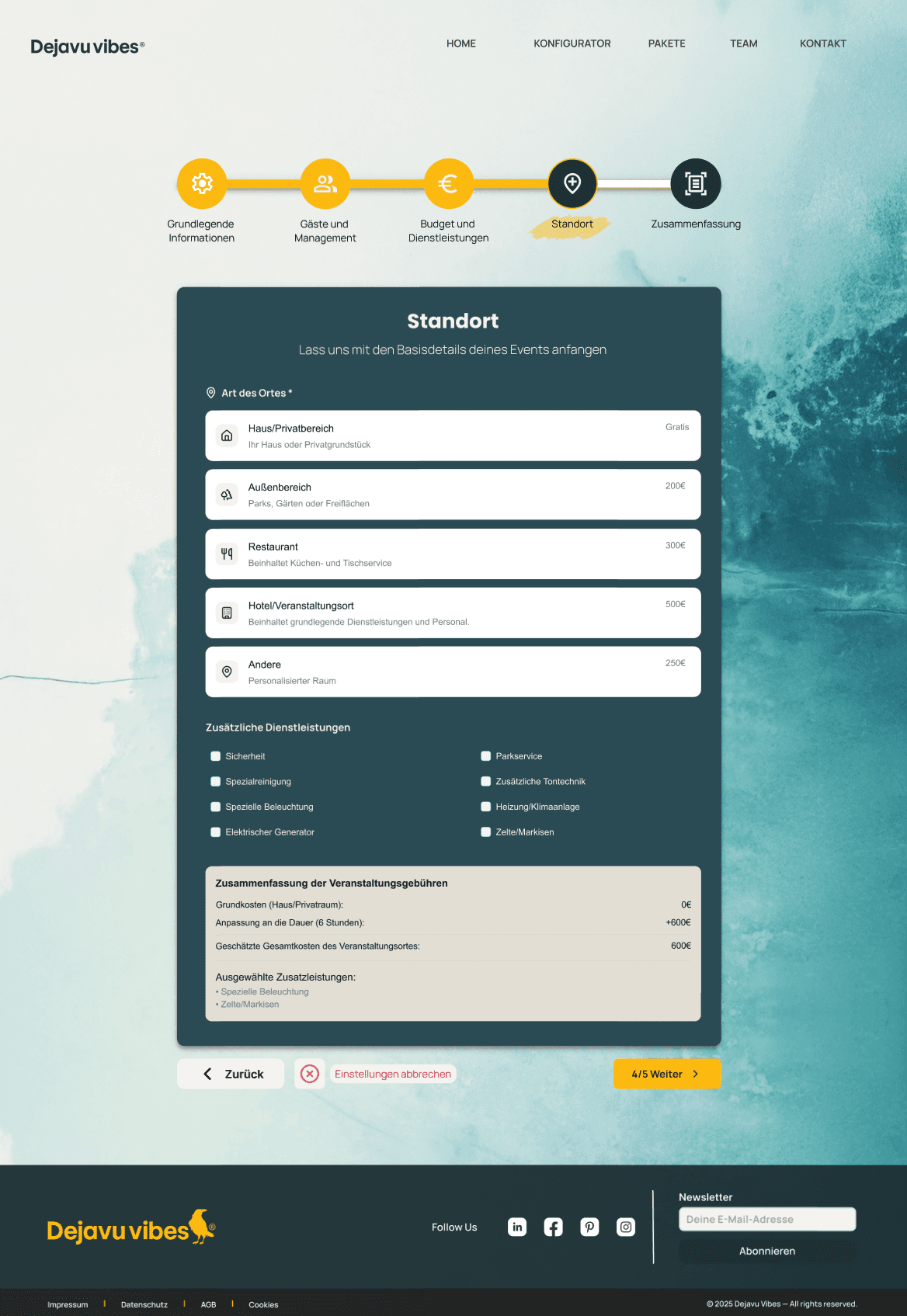
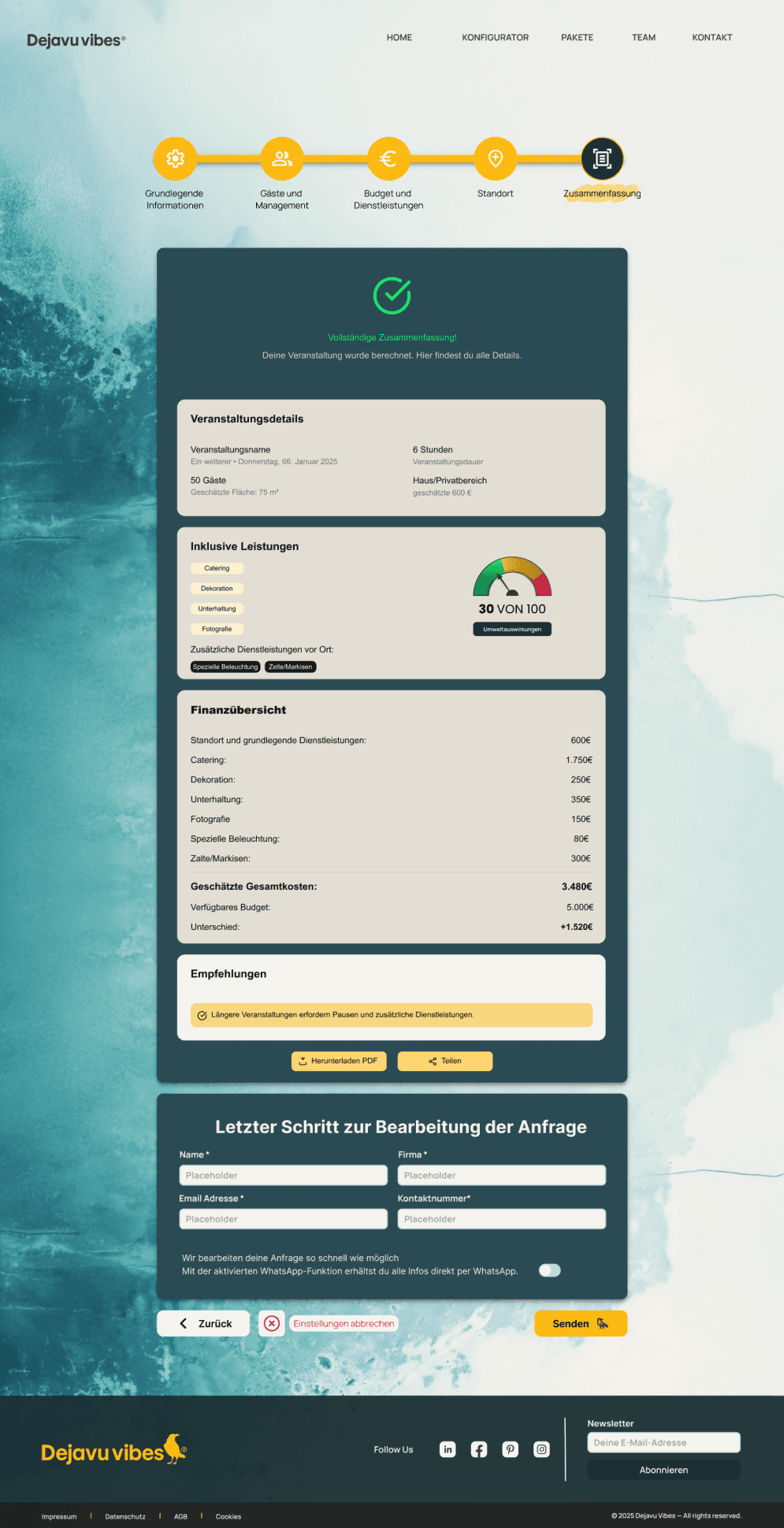
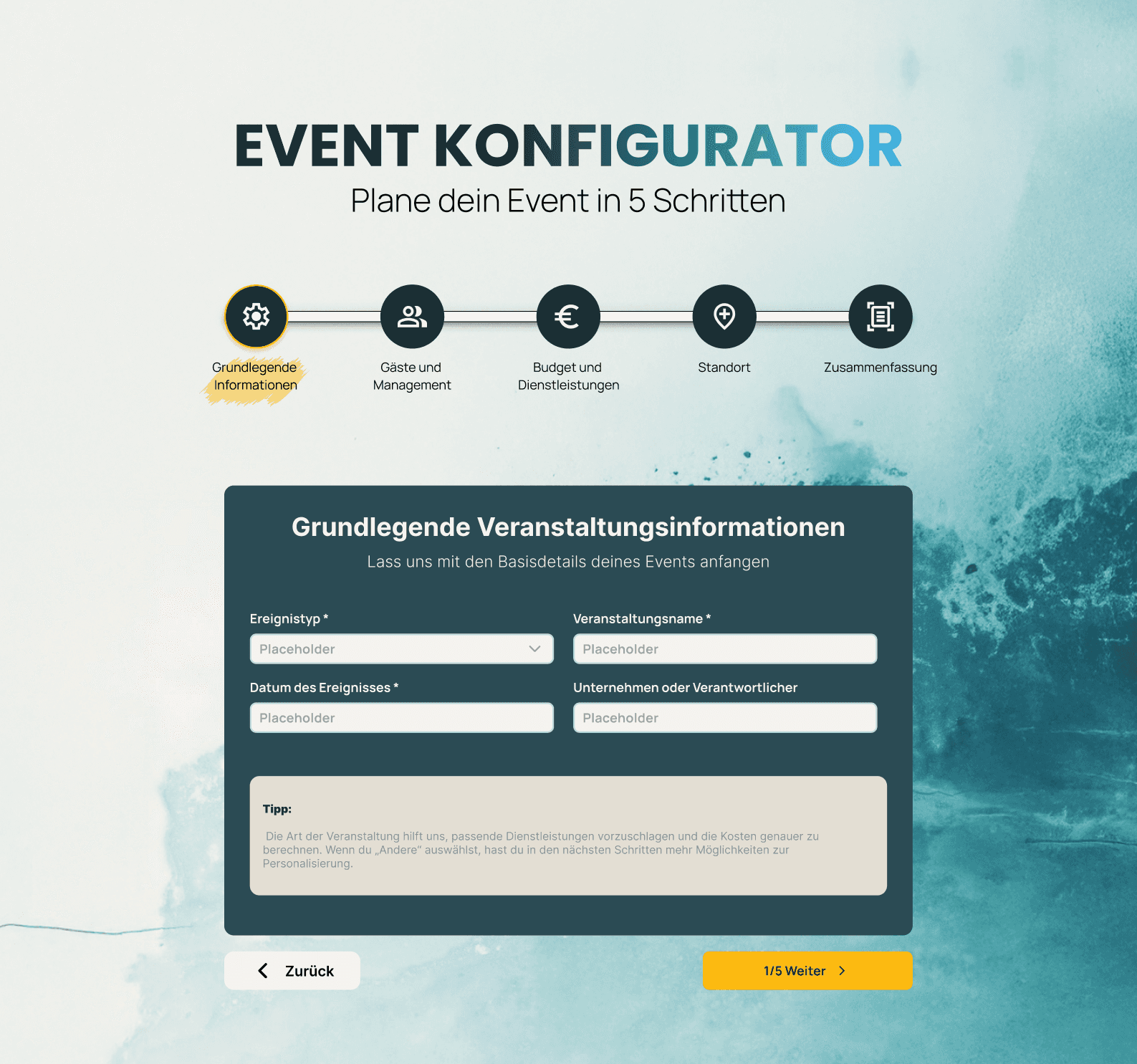
The event configurator is designed to help users plan their events with minimal friction while clearly understanding the impact of each decision in real time. Each step is carefully structured to reduce cognitive load, allowing users to explore options and variations with a single click. This approach ensures users maintain full control over every detail and gain a holistic view of the event they are planning.
Michael Ayala Escobar
Produktdesigner
EVENT KONFIGURATOR
IN 5 STEPS
Konfigurator
Design
Why think about design systems?
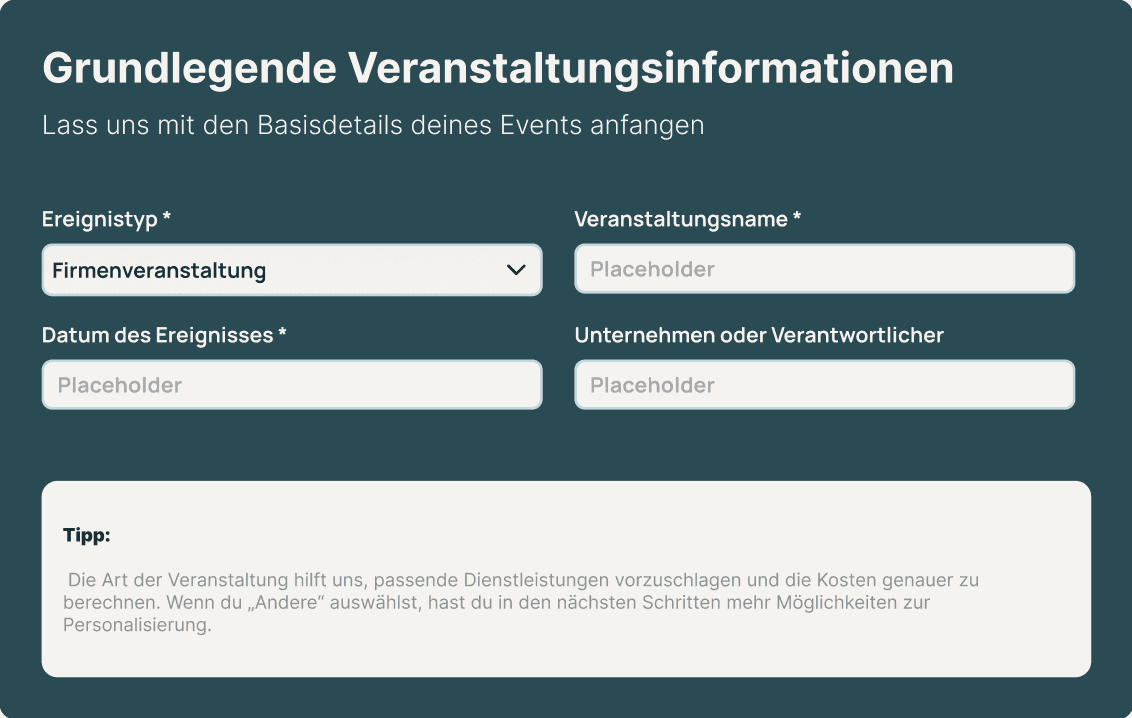
For the visual design of the prototype, I established an initial design system (with variables and styles) defining core foundations such as color palette, typography, spacing, grids, icons and reusable components. This system was intentionally structured to support consistency, scalability, and future growth, laying the groundwork for a potential transition from an MVP prototype to a more advanced SaaS solution.
some components
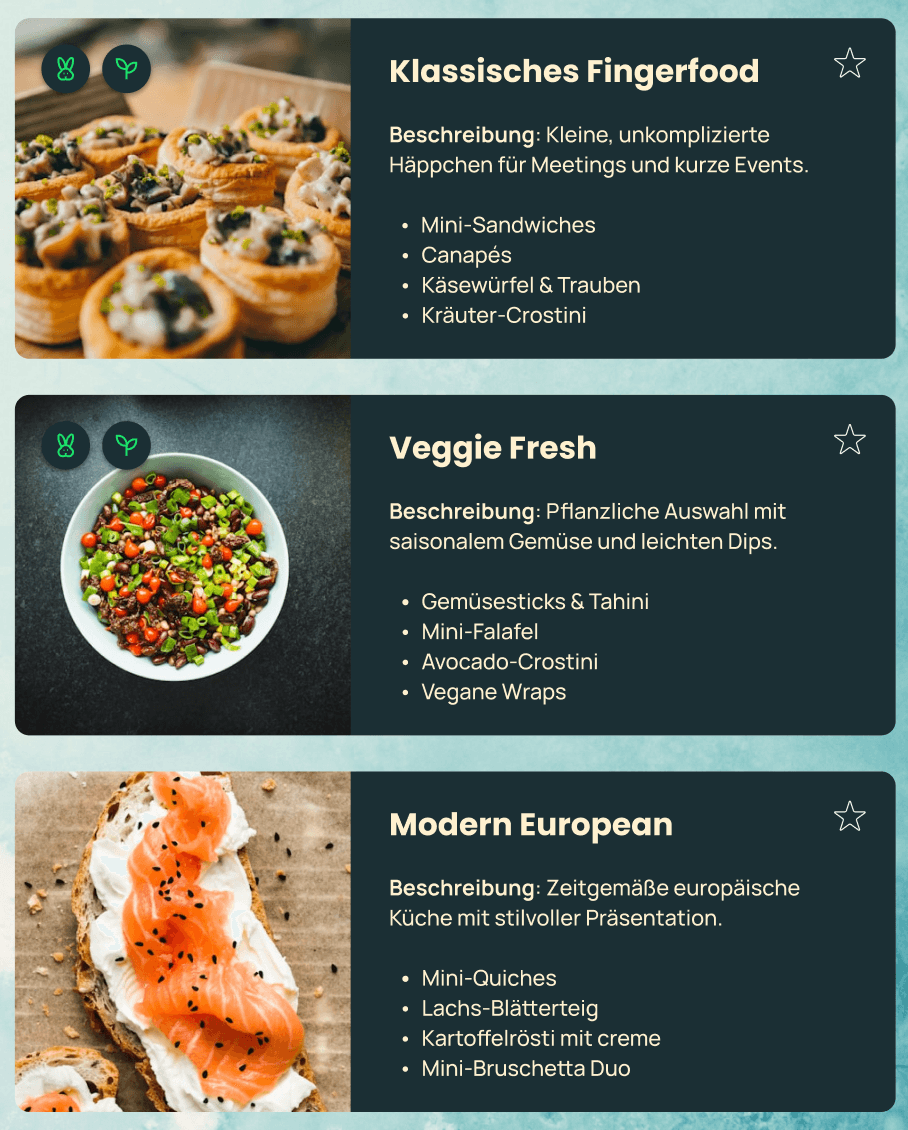
Culinary cards
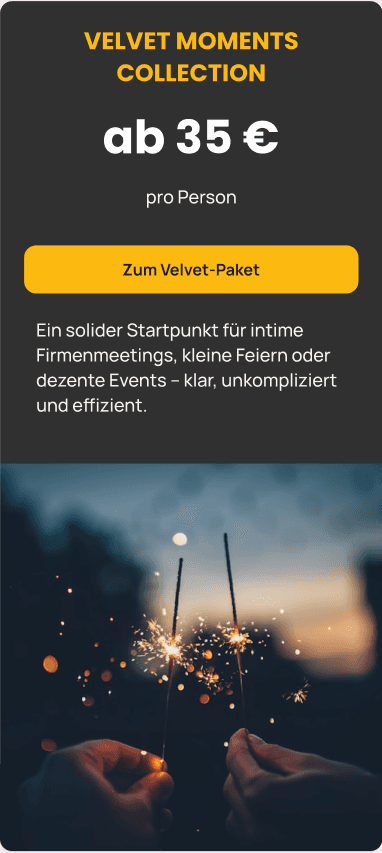
Package card
Inputs-Outputs
Buttons
Footer
Konfiguriere dein Event
Konfiguriere dein Event
Konfiguriere dein Event

More than screens…
These screens show how research, strategy and system thinking translate into a coherent product experience.
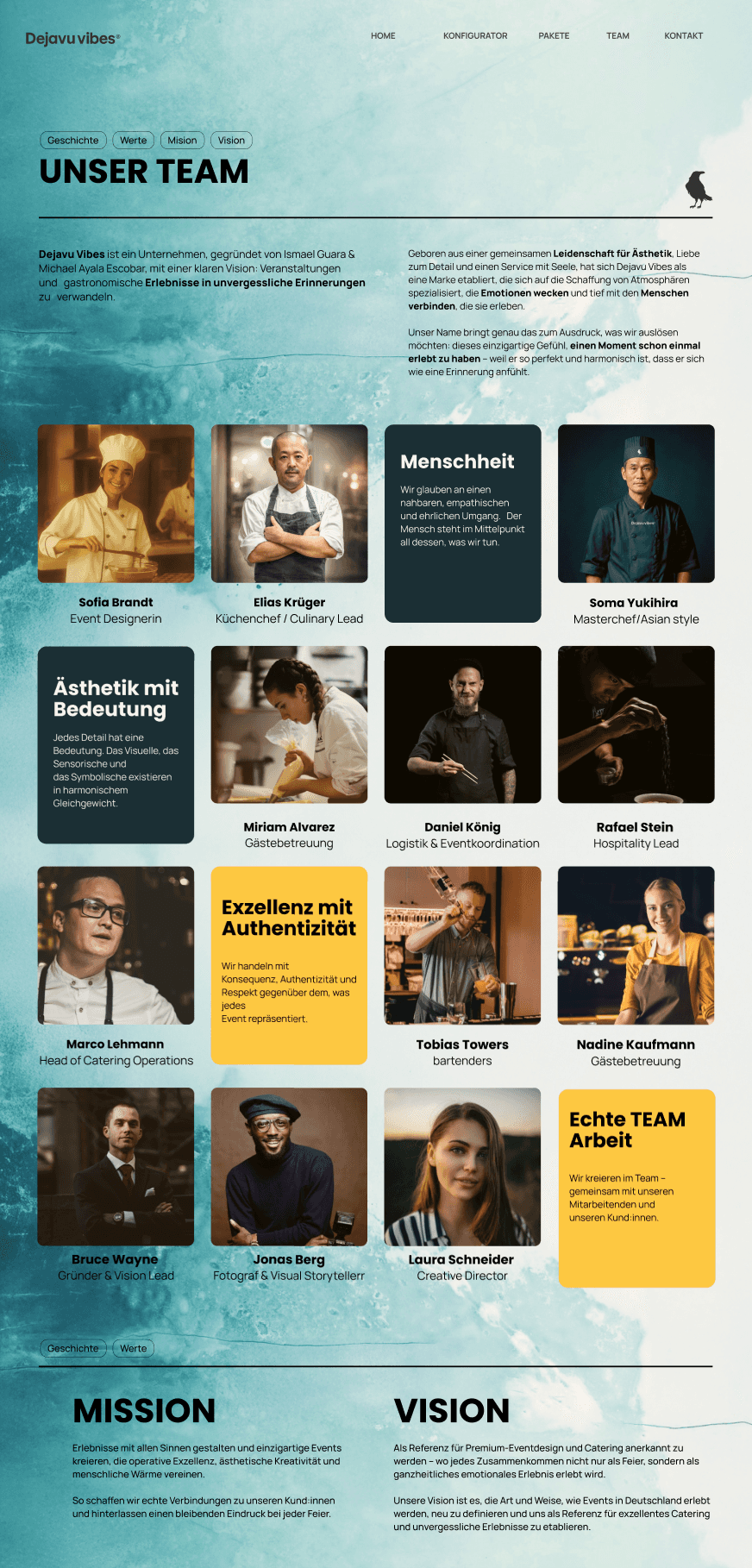
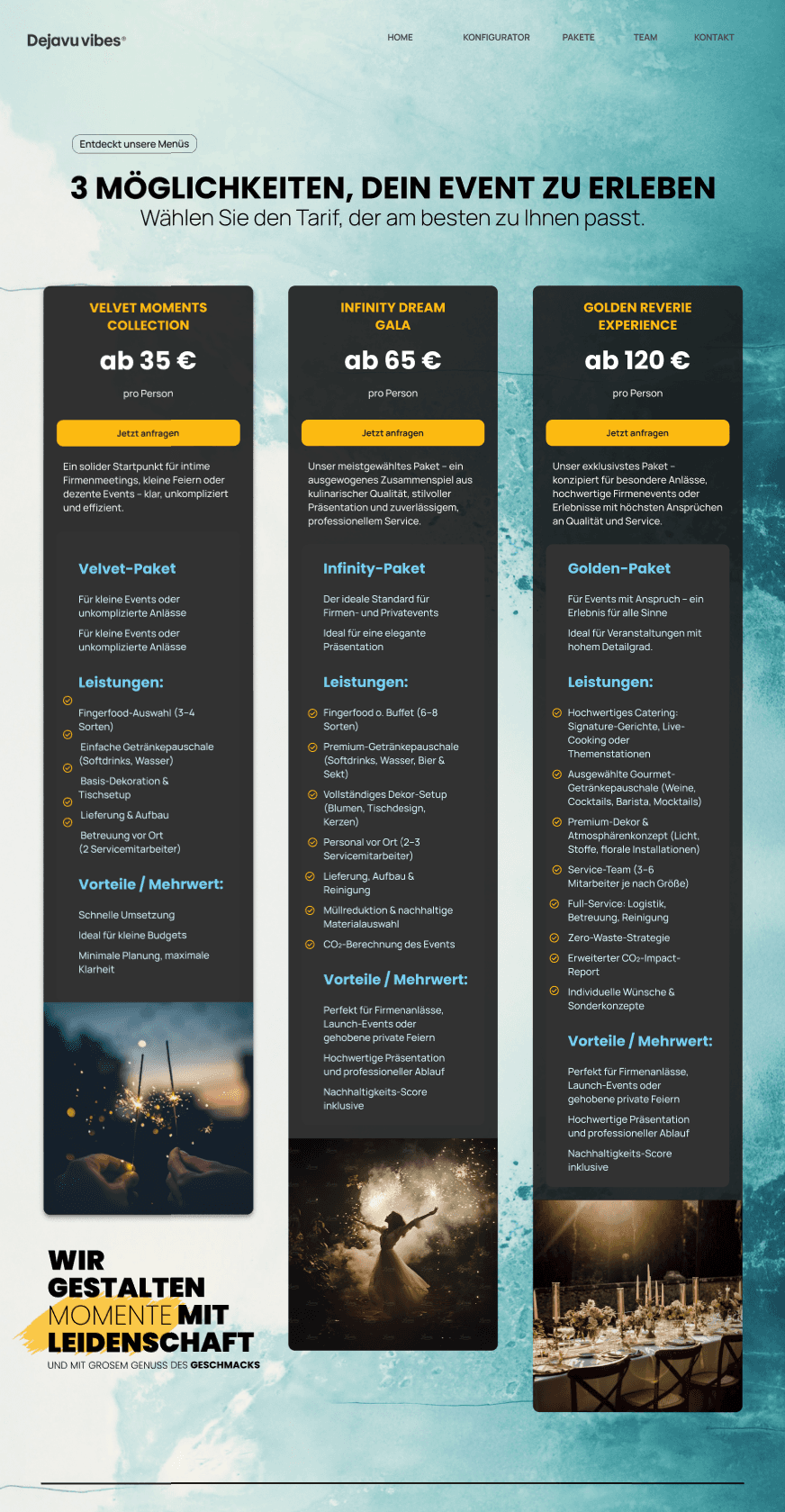
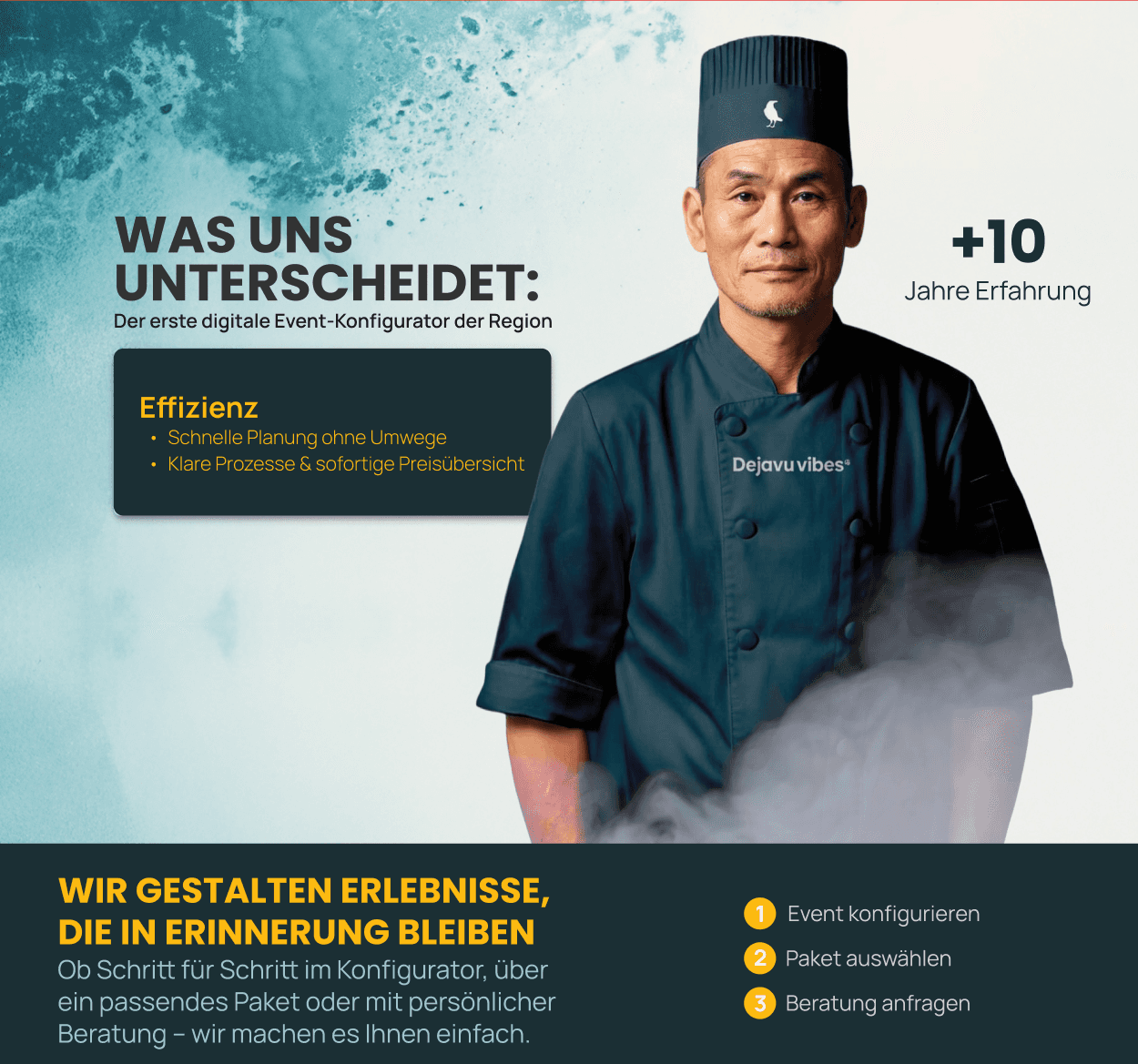
From a friction-reducing hero section, to a trust-building team page and a scalable packages model, each interface is designed to support confident decision-making and align user needs with business goals.
This is where design becomes product, not just UI.


Umweltwirkungsmesser
als strategisches Differenzierungsmerkmal
Michael Ayala Escobar
Produktdesigner
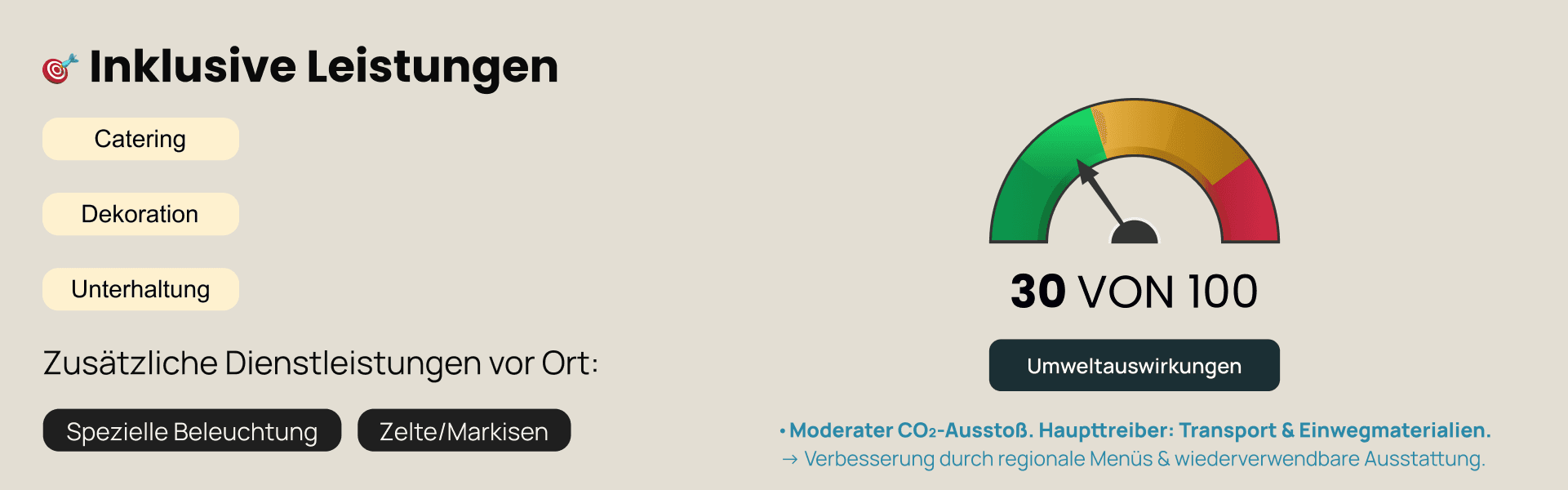
Es bietet einen klaren, differenzierten Mehrwert in einem gesättigten Markt
Er erleichtert sicherere und bewusstere Entscheidungen während der Planung
Stärkt die Wahrnehmung einer modernen, verantwortungsbewussten und zeitgemäßen Marke
Design
Impact measurement as a strategic and differentiating factor
From the outset, the idea of incorporating an environmental impact indicator into the event configuration process was considered. This feature was identified as a key differentiator compared to existing market solutions, as it would enable users to make more conscious and sustainable decisions while planning their events.
DESIGN GUIDELINES
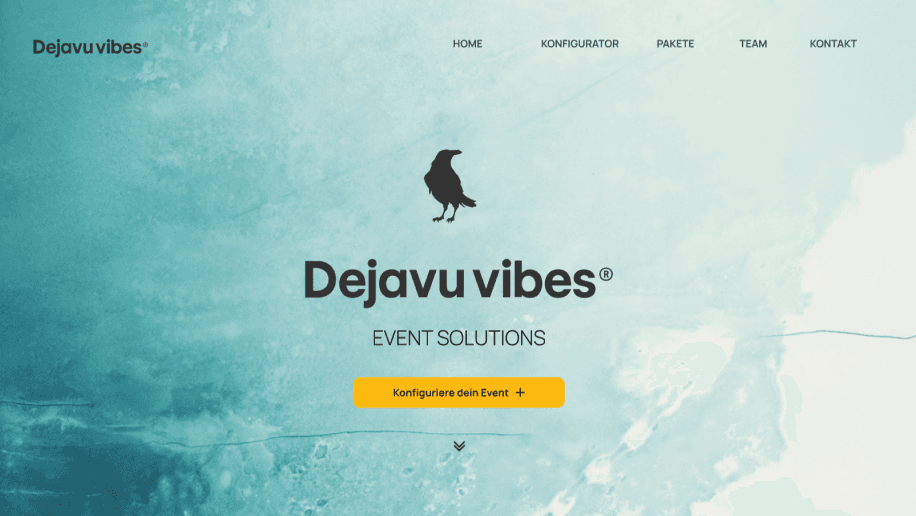
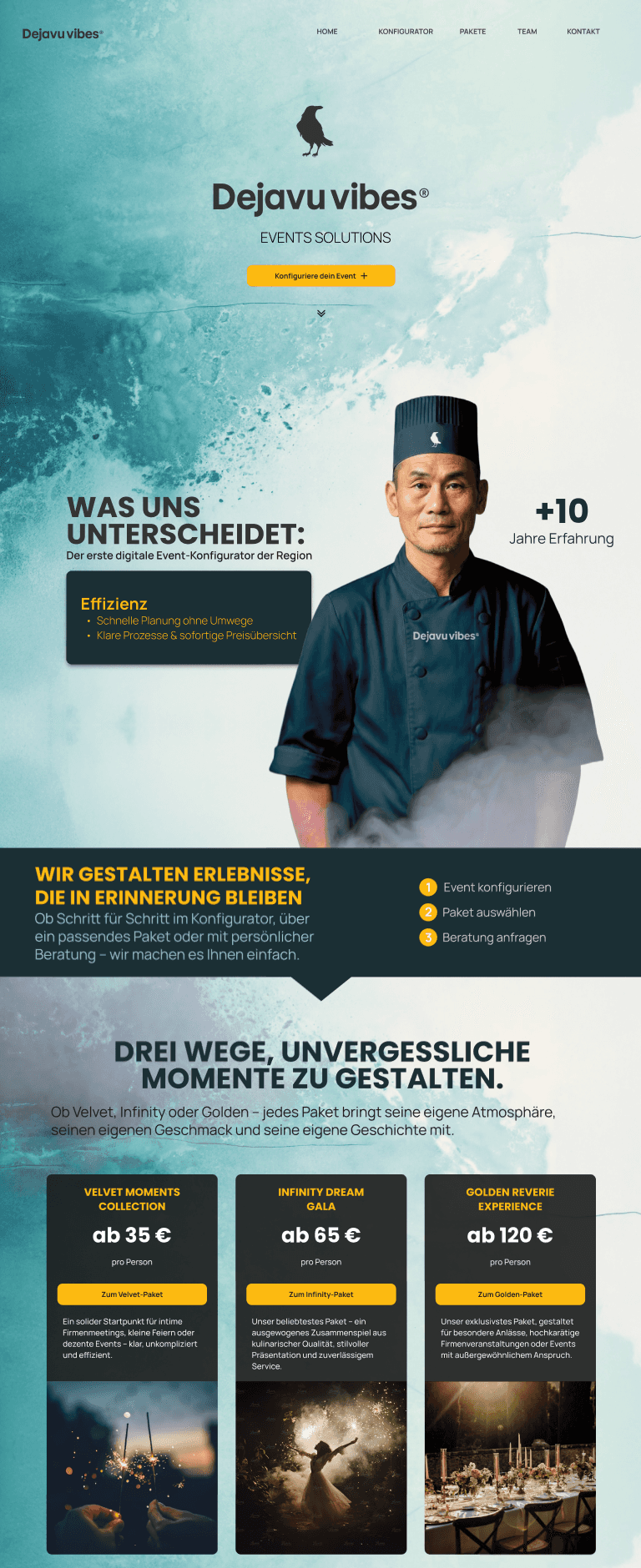
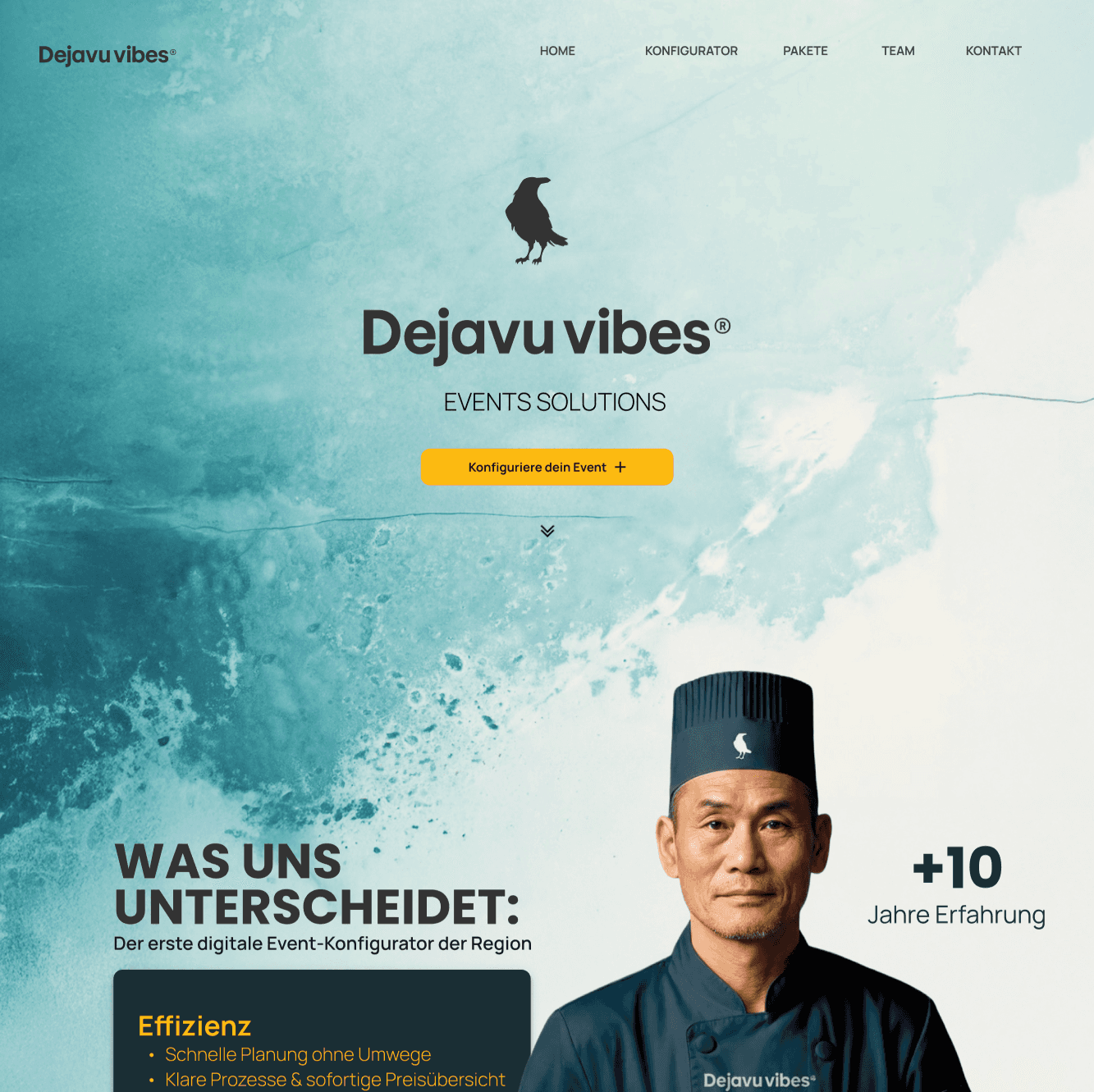
The hero section was designed with a minimal approach and a clear call to action that directs users toward the product’s primary flow. The goal was to facilitate quick information scanning and guide users efficiently to the core functionality of the product.
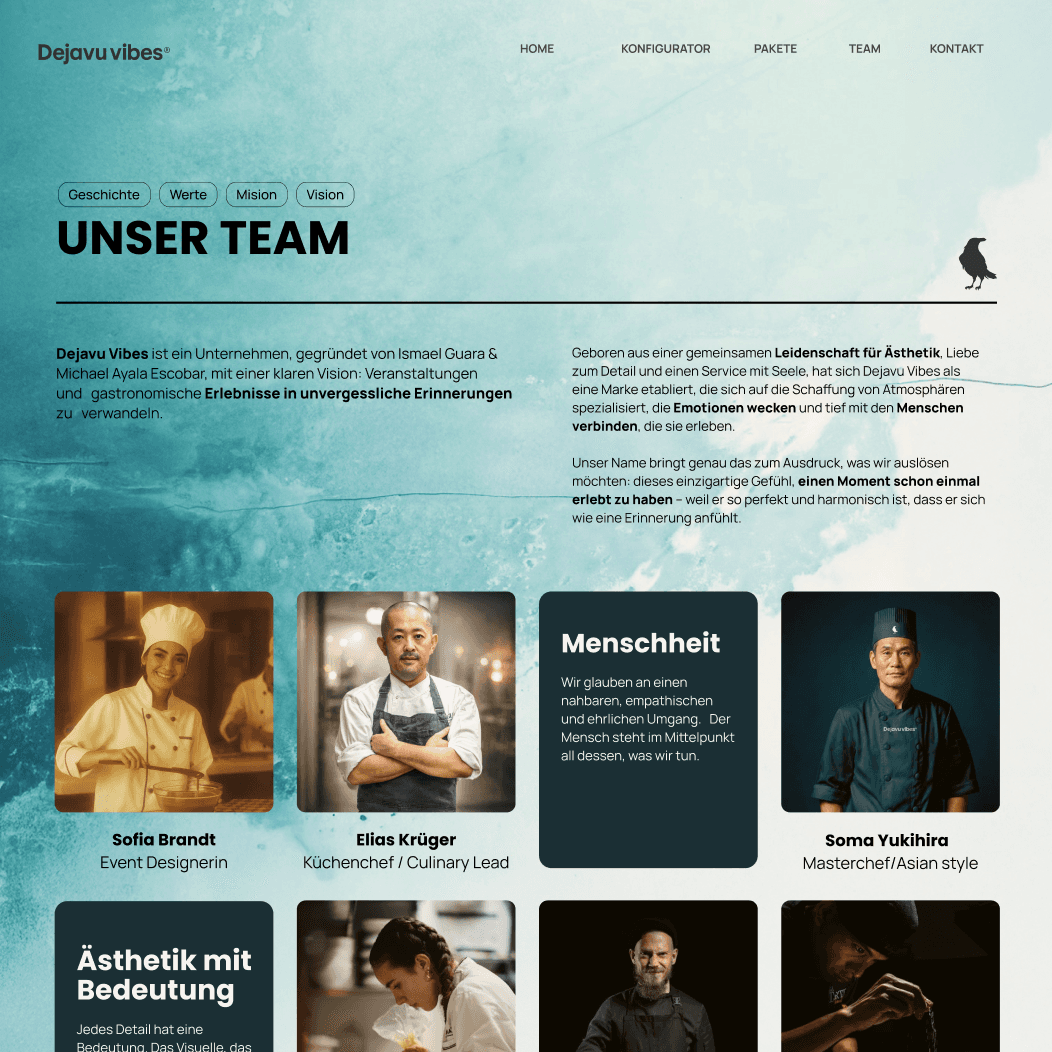
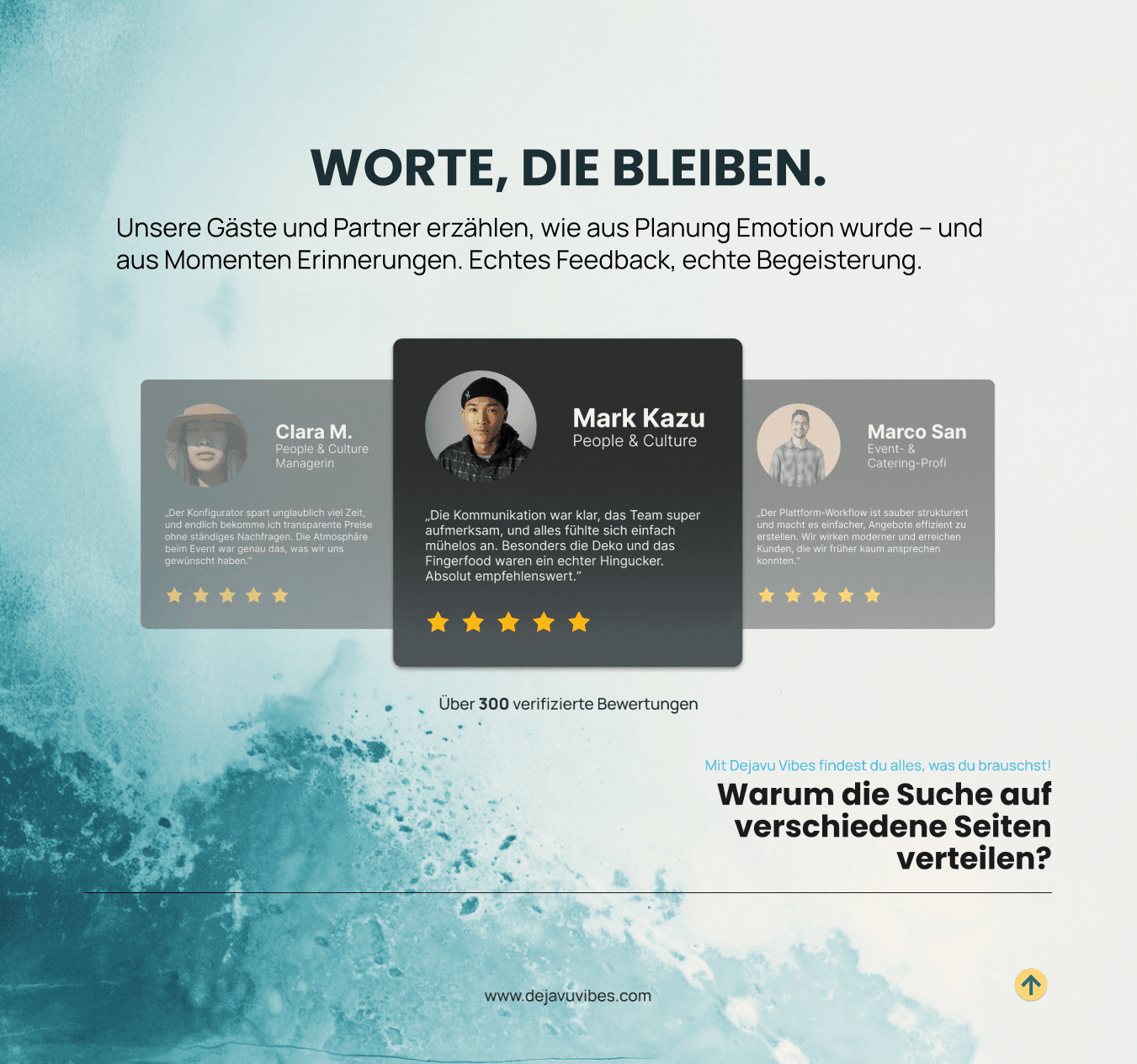
The team and company page was conceived as a trust-building touchpoint (plus the reviews section), providing transparency around the company’s mission, values, and people. This section aims to reinforce credibility and reduce uncertainty by helping users better understand who is behind the service.
The predefined packages page offers a fast, low-friction alternative for hiring services. Packages are presented in a comparative view, allowing users to easily switch between plans, explore details, and understand customizable sections. In addition to improving usability, this approach enables A/B testing to optimize both the flow and the product’s feature set.
This phase translated research insights and design principles into a validated, scalable product experience.
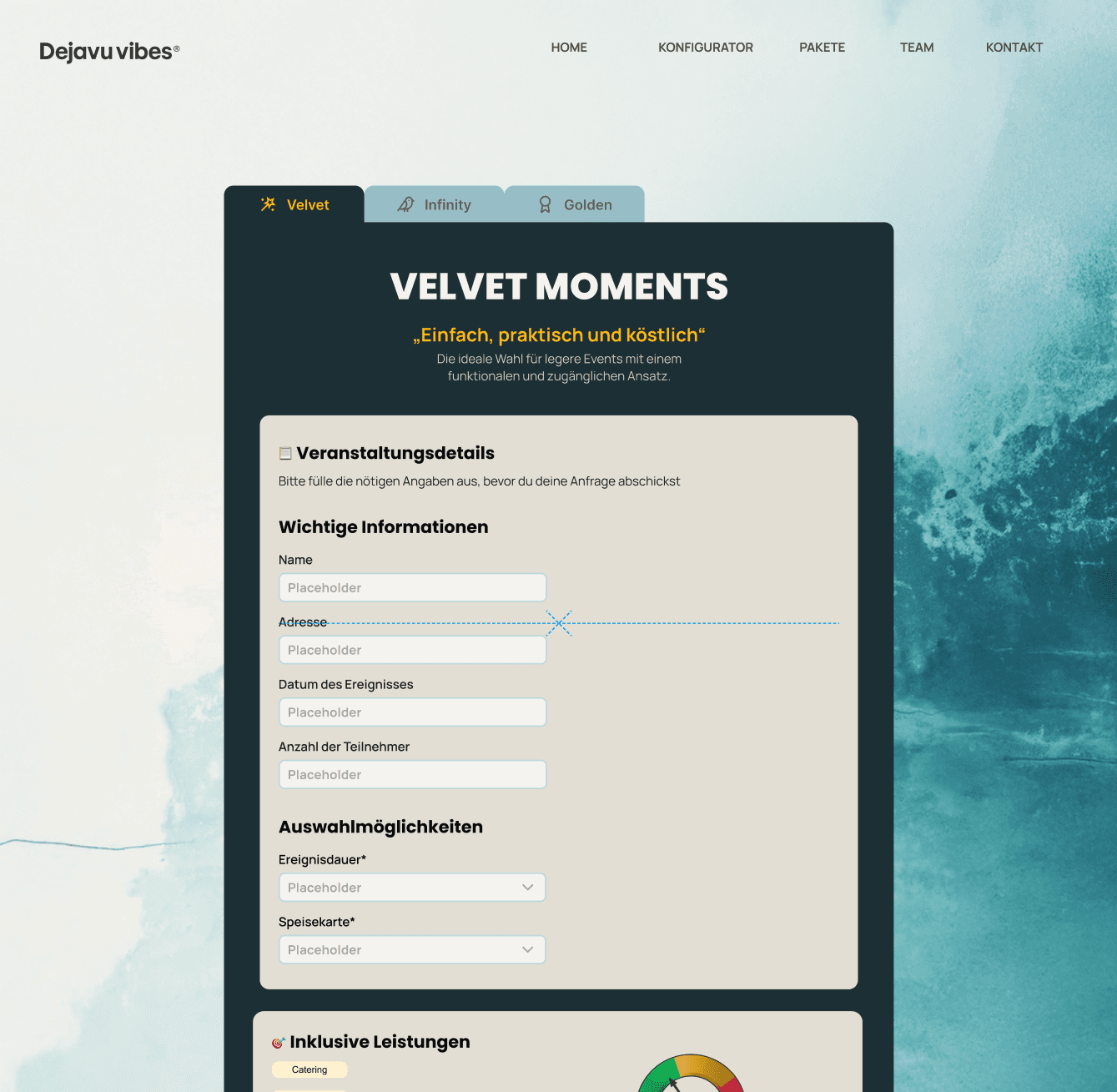
This MVP represents the region's first dynamic event configurator, translating research, strategy, and systems thinking into a real and scalable product experience.
foundations of success
Defining KPIs during the conceptual phase made it possible to evaluate whether the solution was working, iterate based on evidence, and align UX decisions with business objectives.
Results from usability testing and prototype validation.

Task Success Rate
Events Completed Successfully
•Measures successful event setups
•Ensures the main flow is effective
92%
Time on Task
•identifies friction points
•Optimizes user efficiency
Average Completion Time
4m
Conversion Rate
•Track pricing request conversions
•Links UX to business impact
Requests Submitted
38%
Measuring Impact
This project allowed me to design with metrics in mind, defining clear KPIs to evaluate usability, efficiency, and business impact, while establishing a foundation for continuous product optimization.
From MVP to Scalable SaaS Platform
The MVP was intentionally designed as the foundation of a long-term product strategy, not as a standalone website.
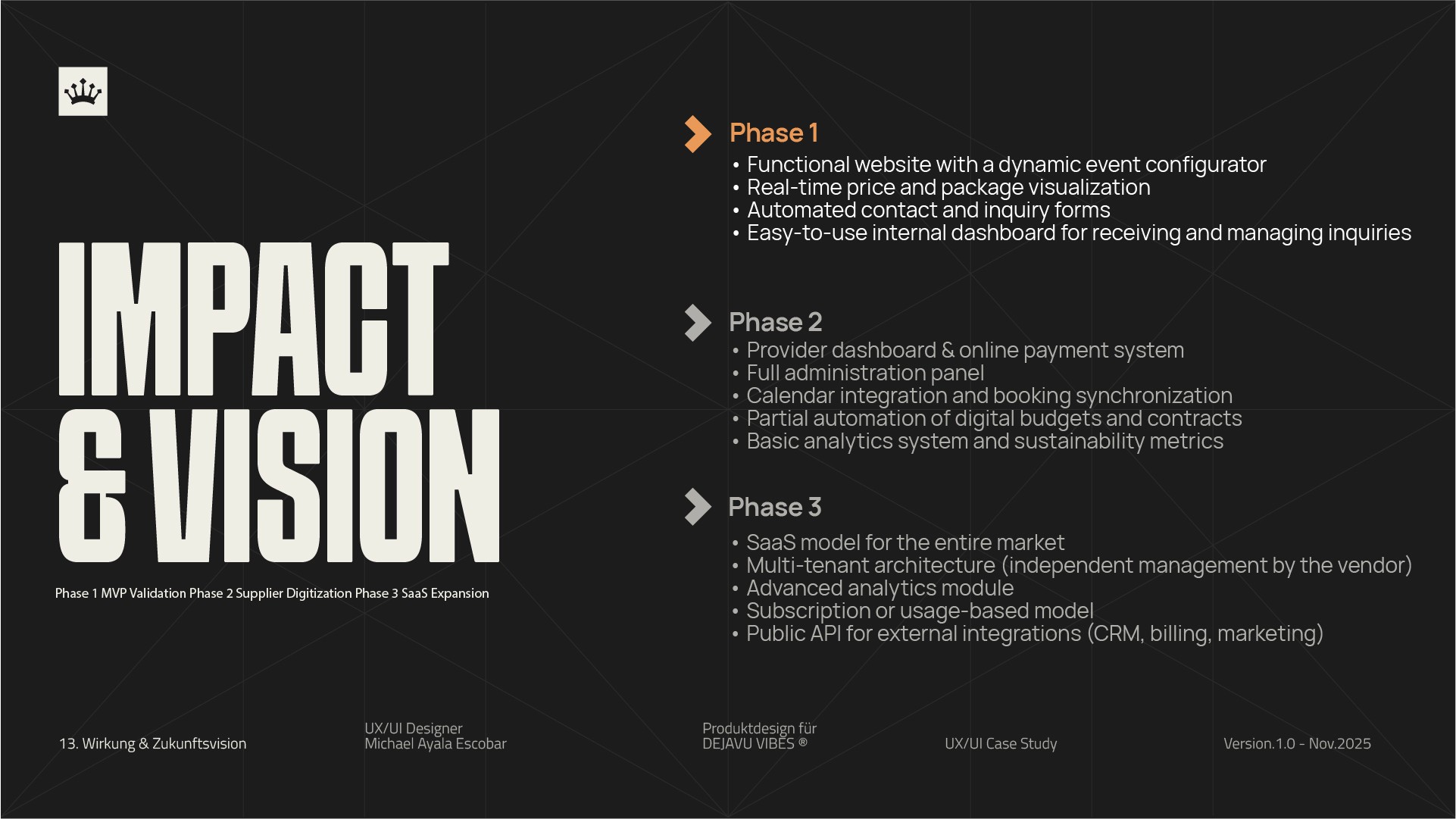
By starting with a dynamic event configurator, real-time pricing and a lightweight internal dashboard, Phase 1 validates the core problem: reducing uncertainty and friction in complex B2B decision-making. This allows the team to test real user behavior, measure impact through clear KPIs, and build confidence in the product direction.
Each following phase is a natural, evidence-driven evolution:
Phase 2 scales operational value by digitalizing the supply side: dashboards, payments, calendar integrations and automation transform the product from a configurator into a true business platform.
Phase 3 expands this validated system into a SaaS model for the entire sector, enabling multi-tenant architecture, analytics, sustainability metrics and open APIs that turn isolated event planning into an integrated digital ecosystem.
This roadmap reflects a deliberate product strategy:
start small, validate fast, and scale with a system mindset — ensuring that every design decision contributes to a viable, scalable and future-proof SaaS platform for the event and catering industry.
key takeaways (core learnings)
1. Research is the foundation of every design decision
I learned that without a deep understanding of real user problems, context, and motivations, solutions are built on assumptions. This often leads to friction, rework, and unnecessary costs.
2. Clarity and transparency drive conversion
I confirmed that when processes, pricing, and system states are clear and visible, users make decisions with greater confidence. This reduces uncertainty and directly improves business outcomes.
3. System thinking enables scalable products
Designing with a system mindset — rather than focusing on isolated screens — ensures consistency, accelerates iteration, and prepares the product to grow without sacrificing quality or coherence.
Closing statement
These learnings reinforced my approach as a Product Designer: research-led decision-making, clarity as a core principle, and system-driven design focused on meaningful business and user impact.
“This foundation positions the product for future iteration, scalability, and measurable growth”.
“Thank you for taking the time to explore the thinking and process behind this project.”
By Michael Ayala Escobar